The Money Is Still Not Moving. Here Is Why and What Changes It.
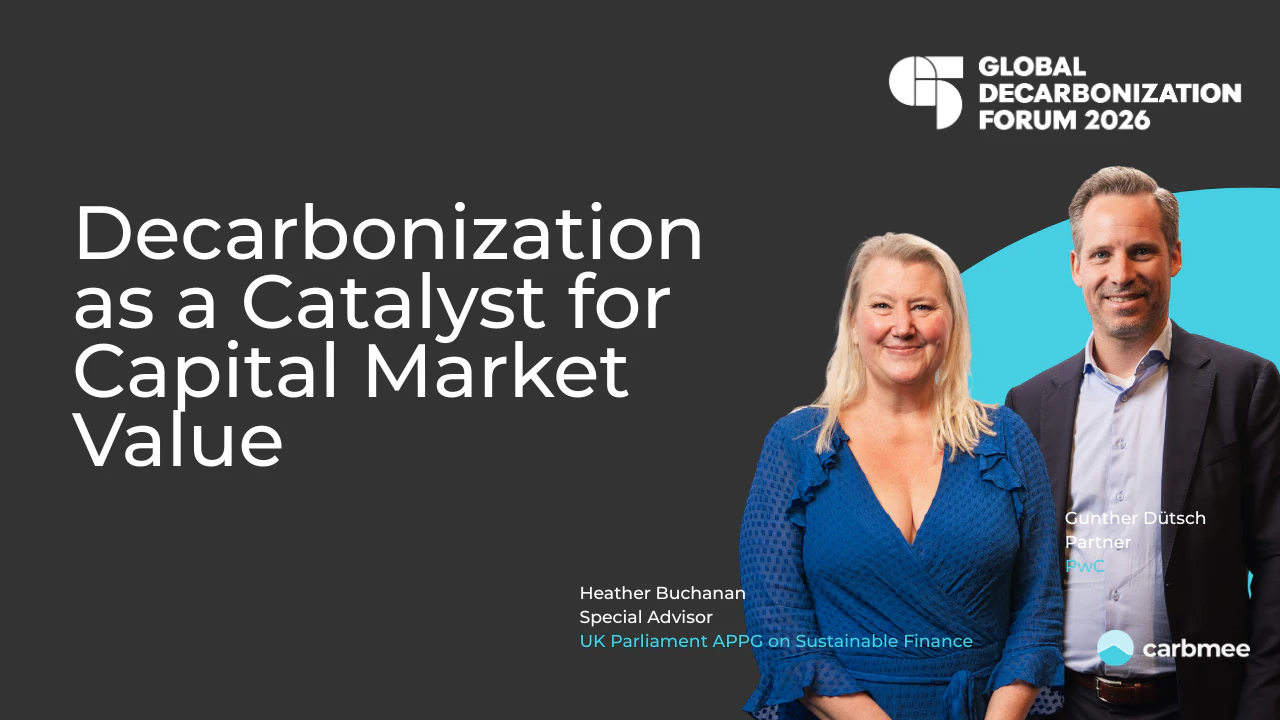
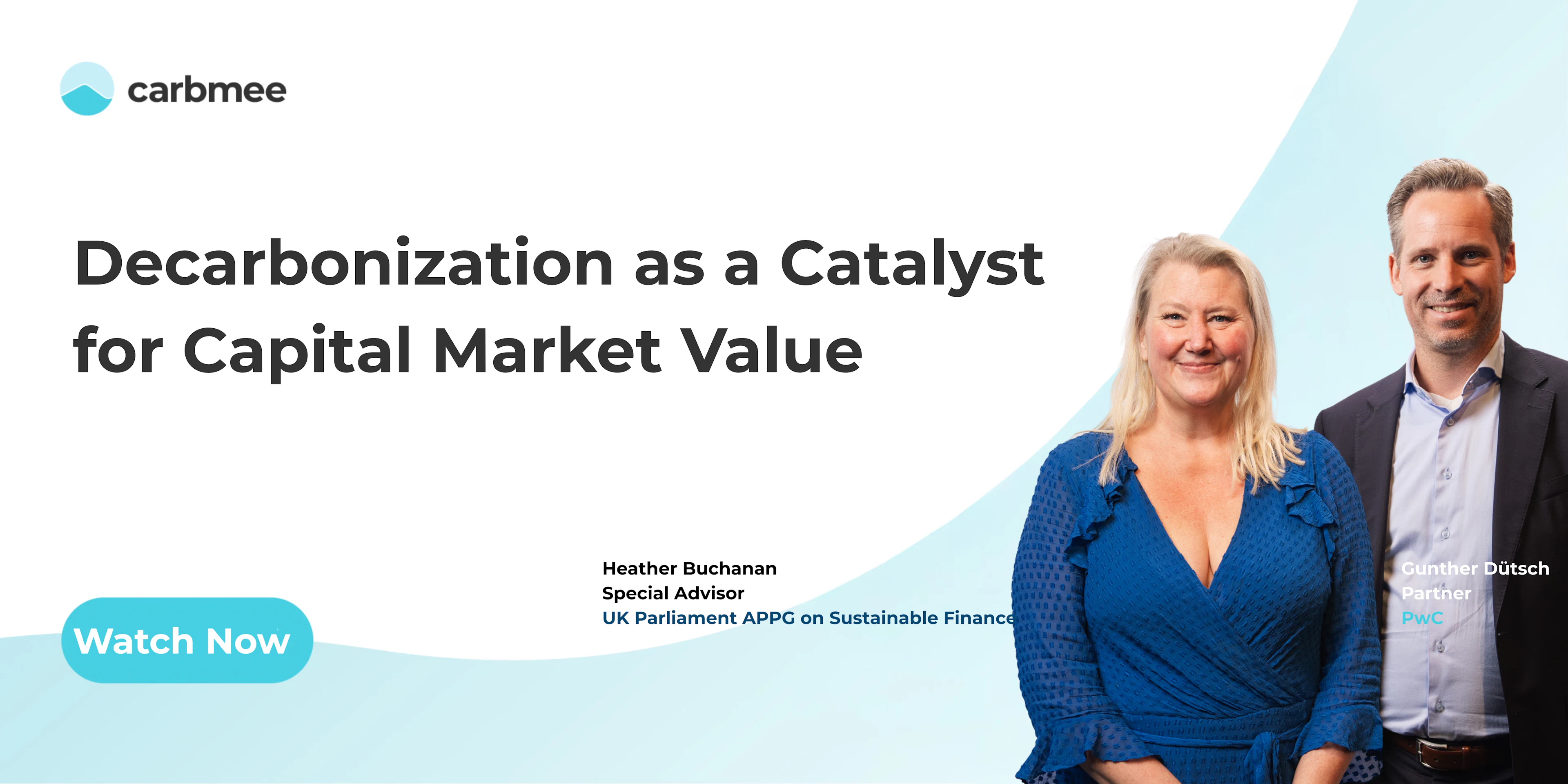
At the Global Decarbonization Forum 2026 in Berlin, Heather Buchanan, Special Advisor to the UK Parliament's APPG on Sustainable Finance, and Gunther Dütsch, Partner at PwC Germany, sat down for a fireside chat that cut to the heart of the transition disconnect. Businesses are still acting. Politicians are still hesitating. And the narrative gap between them is quietly becoming one of the most expensive problems in the room. Together, they made the case for what it actually takes to close it, structurally, commercially, and politically.

A 500-Year Accounting Problem
Heather opened with a framing that puts the entire challenge in perspective. The first book on modern accounting was published in 1494. In the five hundred years since, the world has aligned around a shared definition of risk and value, the profit and loss statement and the balance sheet. At no point on that journey did carbon, nature, or climate change enter the model.
That is not a political failure. It is a structural one. And until those foundations shift, at every level from city regulation to supranational law, the money will not move at the pace the moment demands. The narrative that change equals cost rather than opportunity is not just a communications problem. It is a symptom of a system that was never designed to price what is actually at stake.
The Business Case Exists. It Just Depends on Where You Are
Gunther was direct: the business case for sustainable investment is real, but it is not uniform. For energy, the economics are already obvious. Three successive shocks: COVID, the war in Ukraine, and the current geopolitical moment, have made energy independence a straightforward commercial argument. Renewables are growing even in markets where the public narrative says otherwise.
For hard-to-abate sectors — steel, cement, aviation — the picture is more complex. Without a functioning carbon price signal or sustained political support, the market alone will not get there. But this is not unique to decarbonization. Every market transformation in history has required some combination of regulation and subsidy to get off the ground. The real risk now is pulling that support before the companies that invested early have been able to recoup it, effectively penalizing the leaders and rewarding the laggards.
Green Hushing Is Not a Neutral Act
One of the most pointed moments of the conversation came when Heather addressed the phenomenon of green hushing, the growing tendency of companies to quietly continue their sustainability work while scrubbing any mention of it from public communications, out of fear of political backlash.
The problem is not just reputational. It is structural. When companies go silent, the politicians who set regulations lose the signal they need to hold the line. The investment case weakens. The narrative defaults to cost. And the work that has already been done becomes invisible at precisely the moment it needs to be most visible. Corporates and policymakers need to be more honest with each other and businesses, in particular, need the backbone to keep saying clearly that the system still is not working and that rolling back regulation now would undo years of progress.
What the Winning Companies Will Have in Common
Both speakers were asked the same question: what separates the companies that will win the next decade from those that will not? Gunther identified three imperatives. First, integrate carbon into every operational business decision, not as a sustainability workstream, but as a core input to every business case. Second, make data work for you: transparency is not optional, and the companies still running carbon programs out of spreadsheets are already behind. Third, build the agility to react to shocks you cannot predict. The volatility of the current environment is not a temporary condition. It is the new baseline.
Heather added one more: backbone. Agility without clarity of message is not enough. The loudest voices in policy rooms right now are not the ones making the long-term business case. That needs to change. Consistent, honest engagement from the business community — not lobbying, not green-washing, not silence — is what gives policymakers the cover they need to hold proportionate regulation in place and what ultimately keeps the level playing field that long-term investment requires.
carbmee EIS™ and the Infrastructure for What Comes Next
The imperatives Heather and Gunther described — integration, data, agility, and transparency — require infrastructure. carbmee EIS™ is the environmental intelligence platform purpose-built for large industrial companies navigating exactly this environment. From data ingestion to audit-ready reporting, carbmee EIS™ helps organizations:
Collect and centralize environmental data across operations and supply chains.
Connect ERP, PLM, MES, and procurement systems in a single data model.
Identify emission hotspots and reduction opportunities with AI-powered analytics.
Streamline supplier collaboration and primary data collection at scale.
Ensure compliance with CBAM, ESRS, LCA, and EUDR from one platform.
Whether your priority is CBAM cost visibility, Scope 3 accuracy, or audit-ready ESRS reporting, carbmee EIS™ provides the infrastructure to move from strategy to action, without a five-year implementation.