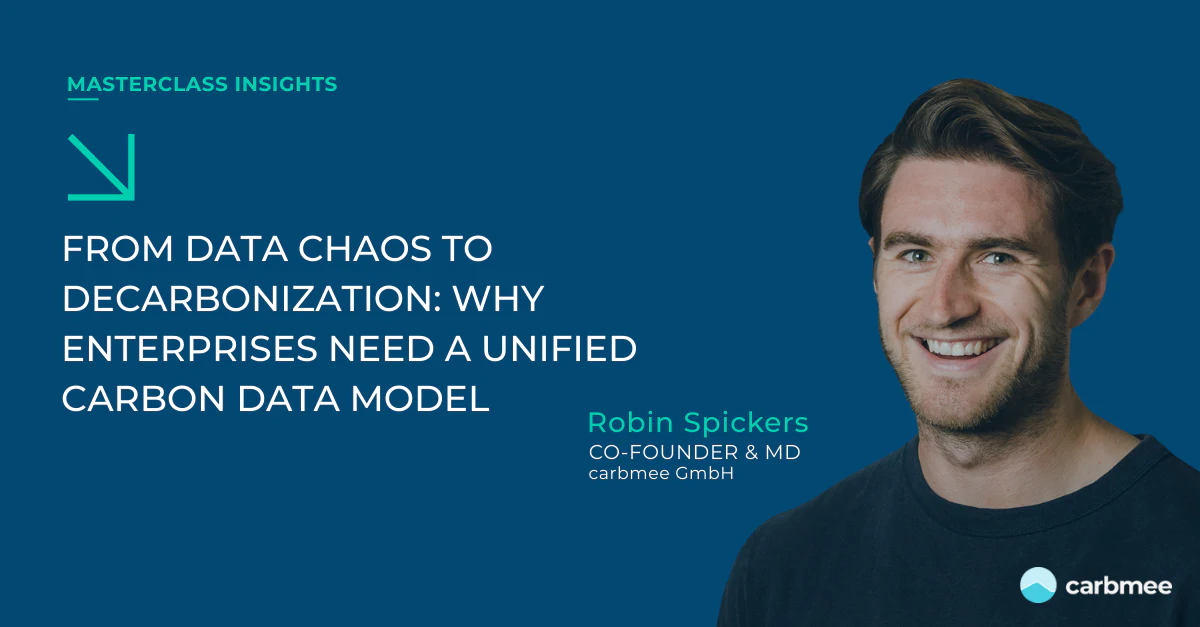
From Data Chaos to Decarbonization: Why Enterprises Need a Unified Carbon Data Model

From Fragmented Data to Strategic Insight
What is the real value of a unified carbon data model? It turns scattered emissions data into clear, actionable insights that guide procurement, sustainability, and finance teams in making smarter, aligned decisions.
Many enterprises do not fail at decarbonization because of a lack of ambition - but because their data is fragmented. Procurement teams manage supplier declarations, R&D teams run isolated LCAs, sustainability teams handle corporate reporting, and finance tracks carbon pricing exposure. None of these systems communicate effectively, resulting in duplicated work, inconsistent emission factors, and slow, reactive decision-making.
This siloed landscape is incompatible with the scale and speed of today’s regulatory and market pressures. According to the IBM Institute for Business Value, 41% of surveyed executives identify inadequate data as the biggest obstacle to achieving ESG goals - surpassing regulatory barriers, inconsistent standards, and skills shortages.
Building a Unified Carbon Data Model
A unified carbon data model has therefore become essential. Carbmee’s Environmental Intelligence System (EIS™) addresses precisely this challenge. Its underlying data model - carbontology - integrates all carbon-relevant information into a single, ERP-like foundation:
- Corporate accounting and product-level LCA use one consistent emissions logic
- Supplier primary data is automatically linked to bills of materials
- Production data enriches emissions models at the SKU level
- Automated AI engines surface hotspots and prioritize reduction levers
This consolidation removes the need for multiple parallel tools and eliminates the risk of divergent datasets across departments.
Unlocking Strategic Value Beyond Transparency
The impact of a unified model extends beyond transparency. It enables scenario planning: companies can forecast carbon cost exposure under future ETS prices, evaluate alternative materials, and assess supply-chain resilience under regulatory change. For enterprises with complex global supplier networks - often involving tens of thousands of SKUs - this level of clarity becomes a strategic advantage.
Case Study: KWS
KWS, one of the world’s leading agricultural producers, needed to unify procurement, sustainability, and financial data to prepare for CSRD compliance. Using carbmee EIS™, KWS calculated 30,000 supplier footprints from transactional ERP data, identified its top 50 emitting suppliers responsible for 55% of Scope 3 emissions, and achieved EY-audited, CSRD-ready results. The unified data model reduced manual workload by 94% and cut consulting costs significantly. KWS emphasized that EIS™ provided “true transparency” and alignment with global standards - demonstrating how connected data transforms complexity into clarity.
The New Baseline for Effective Decarbonization
As regulatory expectations accelerate and investor scrutiny increases, a unified carbon data foundation is becoming the new baseline for effective, credible decarbonization. Companies that embrace SKU-level, supplier-linked visibility will be positioned to make faster, more accurate, and impactful decisions - turning carbon management into a strategic advantage rather than a compliance burden.