Did You Know You Can Identify Your Highest-Impact Carbon Reduction Opportunities with Carbmee EIS?


Most companies know they need to reduce emissions. Fewer know where to start.
That matters because Scope 3 emissions often represent the largest share of a company’s carbon footprint. McKinsey notes that, for most companies, Scope 3 emissions typically account for around 90% of total emissions, with many emissions linked to purchased inputs and supplier activity. Yet these emissions are also the hardest to manage because they sit outside direct operational control and require collaboration across suppliers, distributors, and customers.
The answer is not another static footprint report. It is a data-driven prioritization framework that shows where emissions are concentrated, which suppliers or materials drive the biggest impact, and which reduction levers are commercially realistic.
Why hotspot analysis matters now
For many teams, the challenge is no longer whether to reduce Scope 3 emissions, but where to begin. Procurement, sustainability, and supply chain leaders need to understand which categories create the largest footprint, which suppliers should be engaged first, and which decarbonization initiatives are most likely to deliver measurable impact.
This is especially relevant because Scope 3 emissions often sit outside direct company control. Reducing them requires collaboration across suppliers, distributors, customers, and other value chain stakeholders.
As previously mentioned, McKinsey notes that Scope 3 emissions typically make up around 90% of total emissions for most companies, while BCG and CDP found that reported supply chain emissions were, on average, 26 times greater than direct operational emissions.
In other words, the companies that act fastest are not the ones waiting for perfect data. They are the ones turning usable emissions data into prioritized action - focusing first on the suppliers, materials, and reduction levers with the greatest potential to move the needle.
How to identify your highest-impact carbon reduction opportunities
- Create a complete Scope 3 baseline
Start by connecting procurement, ERP, supplier, material, product, and transaction data. Scope 3 reduction cannot be managed through averages alone. You need a baseline that reflects where emissions actually occur across suppliers, categories, materials, and products. - Run hotspot analysis across your value chain
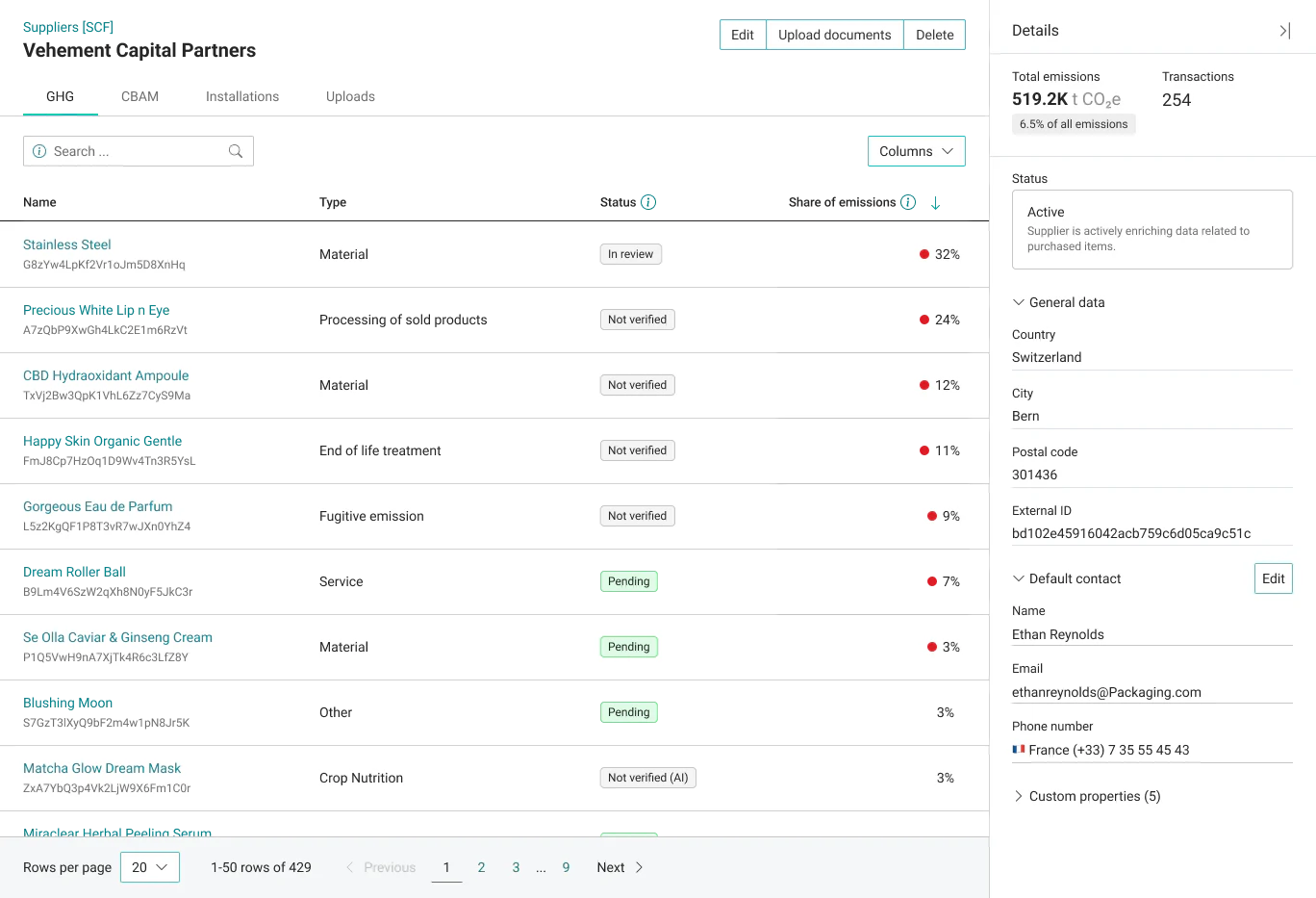
Once the baseline is in place, identify which suppliers, geographies, sites, purchasing categories, and materials contribute the most to total emissions. This helps teams move from broad reporting to focused action.
- Assess reduction levers by impact and feasibility
Next, evaluate which initiatives could realistically reduce emissions. Common levers include switching to renewable energy, changing production processes, increasing recycled material content, redesigning products, changing logistics routes, or substituting high-emission materials. - Prioritize with a clear framework
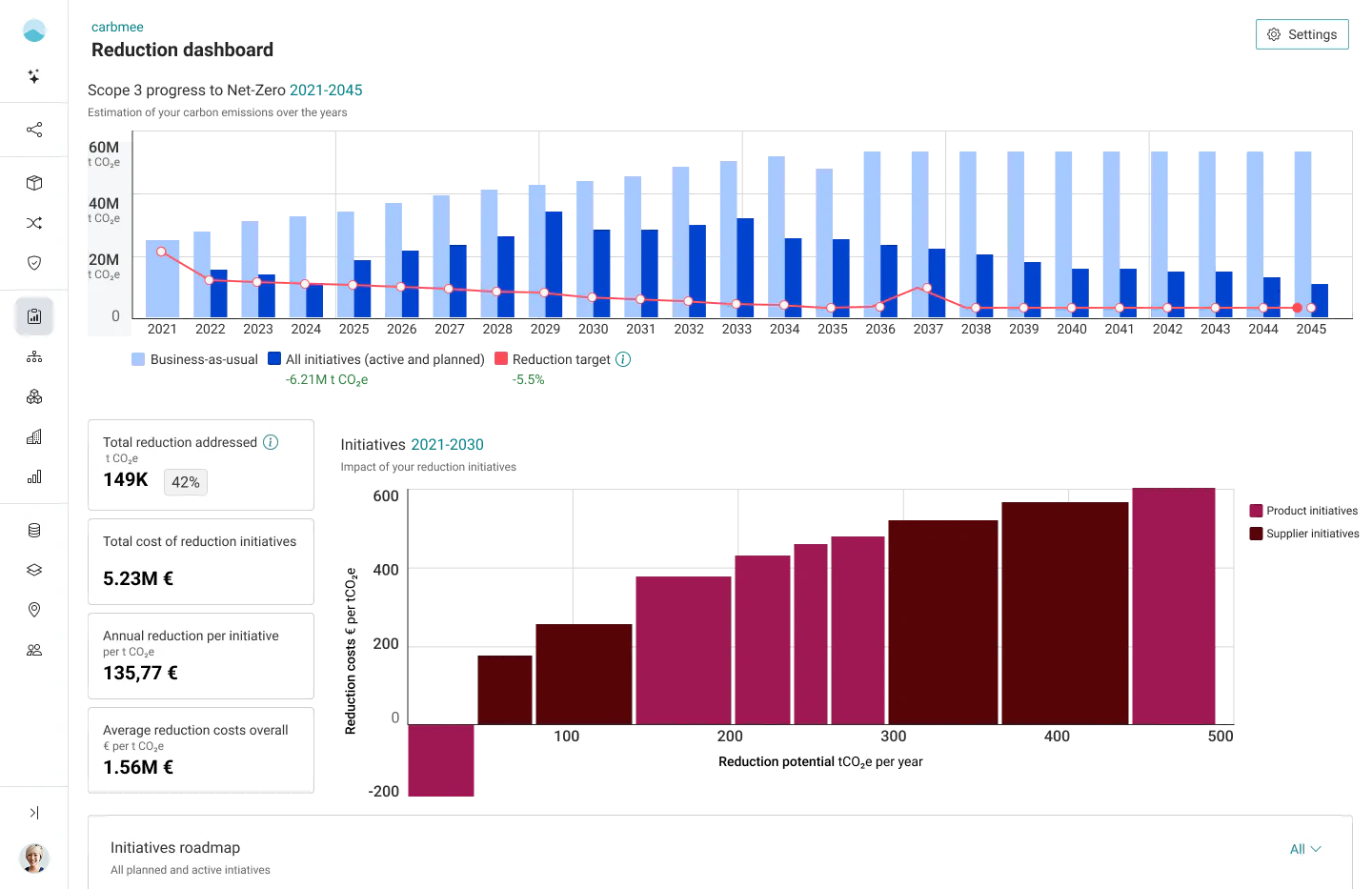
The best decarbonization roadmaps balance emissions impact, cost, supplier readiness, implementation complexity, and business value. Marginal cost abatement curves can help teams compare reduction opportunities by cost per ton of carbon reduced and total abatement potential. - Engage hotspot suppliers first
Supplier engagement should not start with everyone at once. Begin with the suppliers that drive the largest share of emissions or control the most important reduction levers. - Translate insights into a roadmap
A practical roadmap should show which initiatives to act on now, which need supplier collaboration, and which require longer-term product, sourcing, or process changes. This turns sustainability data into decisions for procurement, product, finance, and operations teams. - Track progress and update priorities
Reduction planning is not a one-time exercise. As suppliers improve data quality, energy mixes change, products evolve, and regulations shift, companies need to refresh their hotspots and roadmap regularly.
How Carbmee helps you move forwad
Carbmee EIS™ helps enterprises move from carbon visibility to carbon action. The platform connects products, sites, supply chains, suppliers, and transactional data, helping teams identify supplier hotspots, model reduction levers, and turn emissions data into strategic business insight.
With Carbmee EIS™ Studio, teams can assess supplier carbon scores, integrate ERP material codes, run advanced Scope 3 scenarios, and use Marginal Cost Abatement Curves to identify and prioritize low-cost emissions reduction opportunities with maximum return on investment.
How ZEISS Found a 31% Scope 3 Reduction Opportunity
ZEISS Photonics & Optics partnered with Carbmee to measure and model emissions across a complex supply chain, including products that could involve 50+ suppliers, 200+ components, and multiple value-adding locations.
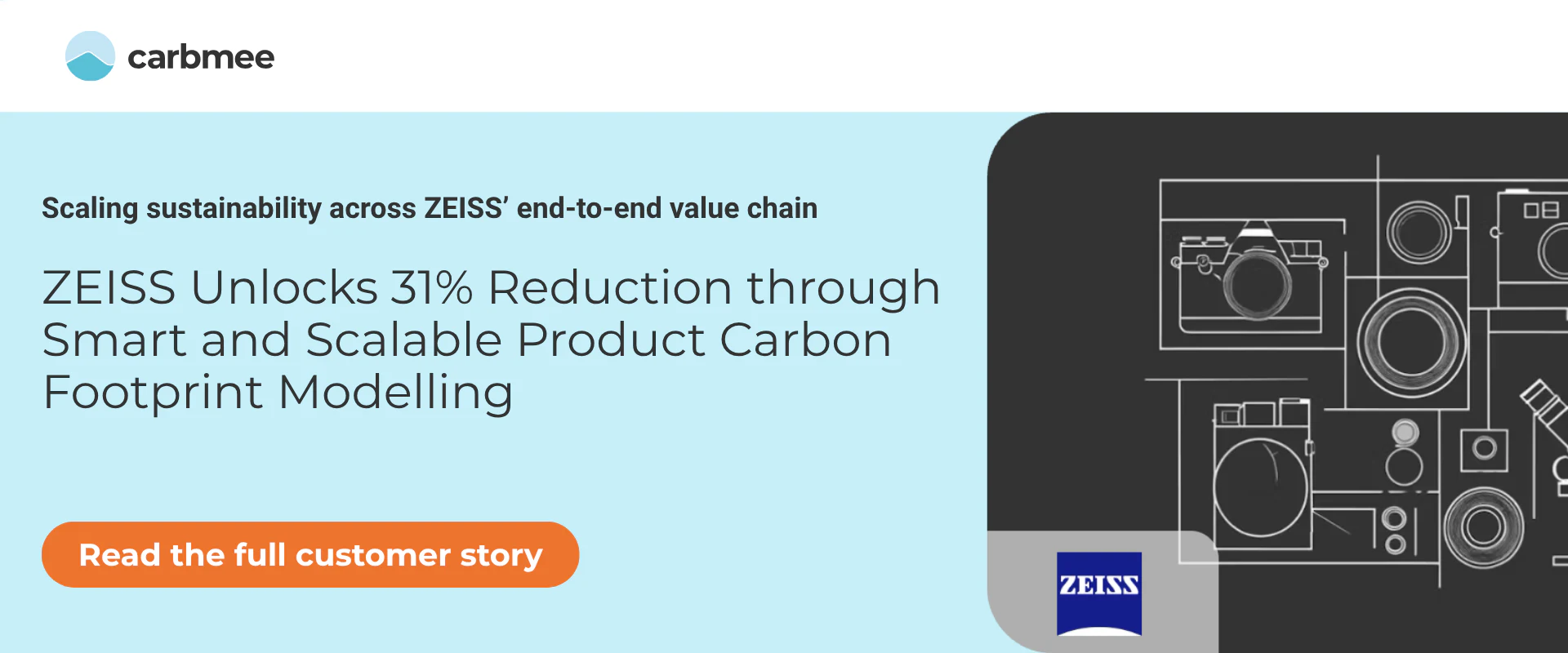
Using Carbmee EIS™, ZEISS unlocked 31% reduction potential in total Scope 3 emissions by focusing on two key levers: renewable electricity for manufacturing and sustainable heat in the production process. Detailed modelling also revealed additional material-level opportunities, including increasing recycled alloys in aluminum consumption and using composite materials instead of pure metal alloys for structural components.
That is what high-impact decarbonization looks like in practice: not a generic reduction target, but a data-backed roadmap that shows where to act, which suppliers to involve, and which levers can move the needle.
Ready to identify your highest-impact carbon reduction opportunities? Book a Carbmee EIS™ demo and see how hotspot analysis, supplier engagement, and decarbonization roadmaps can help turn Scope 3 complexity into measurable action.