
The Business Case For Sustainability Reporting Software In 2026
Sustainability reporting is becoming standard practice, driven by expanding regulation, evolving frameworks and
rising supply chain expectations. As reporting and assurance demands grow, sustainability data are increasingly
treated as business-critical, with pressure to deliver auditable, decision-grade disclosures aligned with financial
performance. In response, organizations are investing in reporting software to improve data quality, efficiency and
cross-functional insight. This report examines how these tools are evolving to support rising reporting demands,
strengthen links with business performance and drive measurable value.
Sustainability reporting is becoming standard business practice
Organizations are becoming increasingly transparent with regard to their environmental and social performance. At the same time, global disclosure rates are continuing to rise: the G&A Institute’s 2025 Sustainability Reporting in Focus report indicates that 99% of S&P 500 firms and 94% of Russell 1000 businesses issued sustainability reports in 2024.
However, while collecting and sharing sustainability data is becoming standard operating procedure, firms are still obliged to justify their investment in sustainability reporting software. To make the business case, they must understand the upward trajectory of sustainability reporting, explain (and strengthen) the connection between sustainability and business performance, and work to apply insights to yield improvements both in sustainability and in business performance overall.
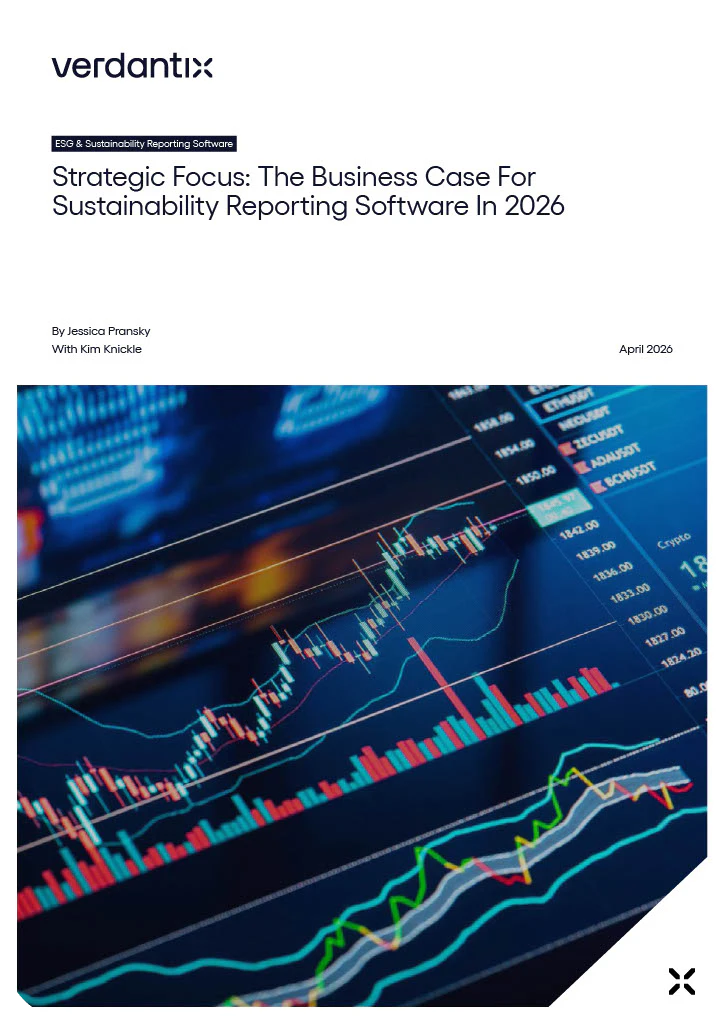
Get your Full Copy of the Sustainability Reporting Software 2026 Whitepaper
What’s Inside the Whitepaper
This white paper explains why sustainability reporting software is becoming a strategic business investment in 2026. It outlines how expanding regulations, voluntary frameworks, assurance expectations, and supply chain pressures are making sustainability data business-critical. It also shows how reporting tools can improve data quality, reduce compliance effort, strengthen decision-making, and connect sustainability performance to measurable business value..
What You Will Learn:
Why sustainability reporting is becoming standard business practice across global organizations
- How regulation, voluntary frameworks, and market pressures are accelerating reporting requirements
- How reporting software improves data quality, auditability, and cross-functional efficiency
- How sustainability reporting tools support ROI through cost savings, risk reduction, strategic planning, and revenue growth
- Why CSOs, CFOs, boards, procurement, operations, and sustainability teams need shared access to reliable sustainability data
- How software capabilities such as data acquisition, workflows, benchmarking, materiality assessments, and performance management translate into business value
- Why organizations need reporting software to move from compliance-focused reporting to sustainability-driven business impact
Download the Whitepaper
Build the business case for sustainability reporting software in 2026 and beyond.