Did You Know You Can Build the Foundation for Battery Passport Compliance with Carbmee EIS?
The EU Digital Battery Passport is turning battery data into a market-access requirement. Under Regulation (EU) 2023/1542, relevant batteries placed on the EU market will need a digital record from 18 February 2027, including LMT batteries, industrial batteries above 2 kWh, and electric vehicle batteries.

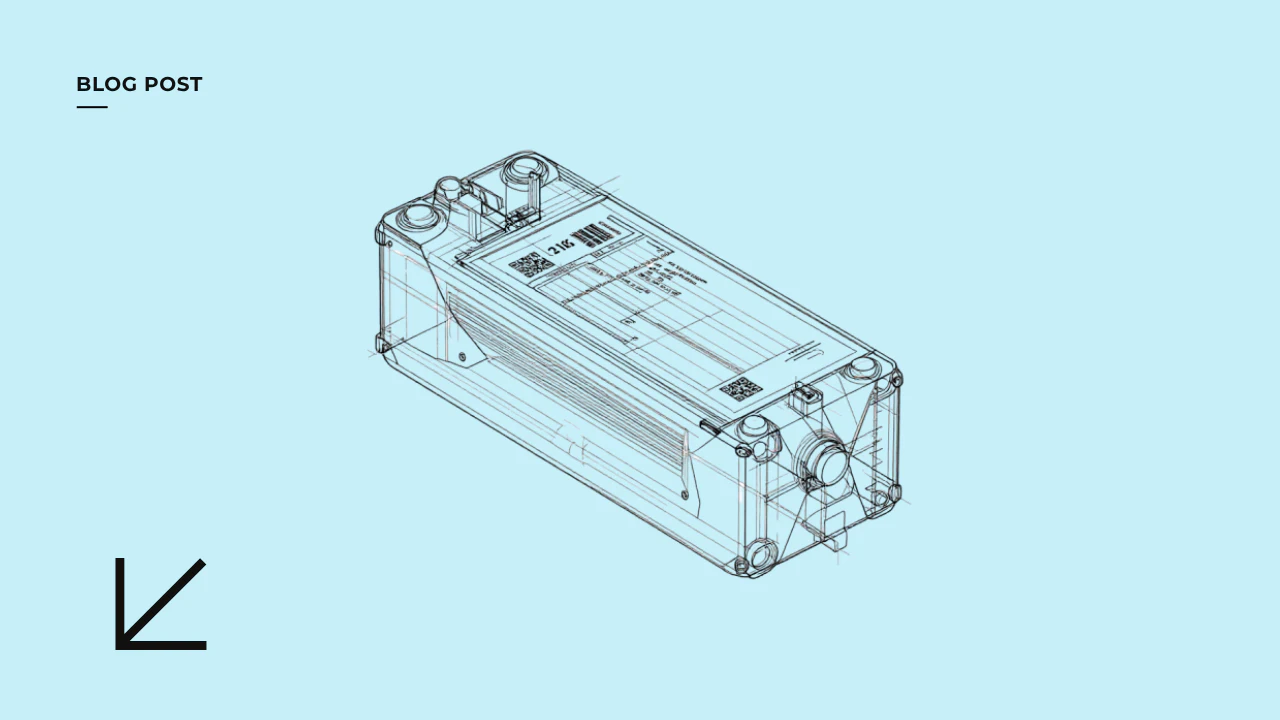
For EV OEMs, industrial battery manufacturers, automotive suppliers, and importers, this is not just another reporting obligation. It is a shift toward lifecycle data management, where product identity, material composition, carbon footprint, recycled content, performance, durability, and end-of-life information must become traceable, structured, and accessible.
The urgency is growing because Battery Passport compliance sits at the intersection of regulation, supply chain complexity, and product data maturity. The IEA expects battery demand to grow four-and-a-half times by 2030 and more than seven times by 2035, increasing pressure on companies to manage critical mineral sourcing, production emissions, and recycling pathways more transparently.
At the same time, the Battery Pass consortium defines the Battery Passport as an electronic record containing lifecycle information at both battery model and individual battery level. Early examples are already emerging: Volvo introduced a battery passport for the EX90 ahead of EU requirements, covering material origins, components, recycled content, and carbon footprint data.
For manufacturers, this makes one thing clear: Battery Passport readiness is not only about compliance documentation. It depends on building a traceable, verifiable data foundation across suppliers, materials, carbon footprints, and product lifecycle stages.
Why Battery Passport readiness matters now
Interest around Battery Passport requirements is increasingly focused on implementation: required data fields, supplier traceability, QR-code access, carbon footprint calculation, recycled content, and legal responsibility. That reflects a clear market shift. Teams are moving from regulatory awareness to operational readiness.

For companies selling into the EU, Battery Passport preparation is becoming a procurement, sustainability, product, IT, and compliance challenge at the same time. The companies that start early will be better positioned to avoid fragmented data collection, rushed supplier requests, and last-minute compliance gaps.
A practical Battery Passport readiness checklist
Before a company can issue a compliant Battery Passport, it needs more than a final digital record. It needs the systems, supplier workflows, and governance to prove that the data behind the passport is accurate, complete, and traceable.
Can you identify every affected battery?
Start by mapping every EV, LMT, and industrial battery above 2 kWh that is placed on the EU market. This should include finished batteries, imported batteries, batteries integrated into vehicles or equipment, and batteries supplied through tier-one partners.
For many companies, this first step is harder than it sounds. Battery data often sits across product teams, compliance systems, ERP records, PLM tools, and supplier documentation. Carbmee EIS™ helps create this foundation by connecting product, site, supplier, and transactional data, making it easier to understand which products are affected and where the relevant data already exists.
Can you trace the required materials?
Battery Passport readiness depends on visibility into critical raw materials such as lithium, cobalt, nickel, and graphite. Companies need to understand where materials come from, which suppliers are involved, and whether origin, certificates, recycled content, and chain-of-custody records can be verified.
This is where supplier data collection becomes a compliance-critical process. One-off spreadsheets and manual email requests are unlikely to scale across tier-two and tier-three supplier networks. With Carbmee EIS™, teams can structure supplier engagement workflows to collect material composition, recycled content, substance data, and supplier-specific inputs in a more repeatable and auditable way.
Can you calculate product-level carbon footprints?
The Battery Passport requires more than general sustainability reporting. Companies need product-level carbon footprint data that can be linked to materials, components, production processes, and lifecycle stages.
That means moving beyond average emission factors wherever possible. A stronger foundation connects bill of materials data, supplier inputs, manufacturing data, energy use, logistics information, and lifecycle assessment models. Carbmee EIS™ supports product carbon footprint calculation with LCA-grade precision, connecting emissions data back to the underlying product, supplier, and transaction records.
Can you prove data completeness?
With 80+ data fields expected per passport, data gaps can quickly become compliance risks. Companies need to know which fields are complete, which are missing, which rely on supplier input, and which may need verification before a product is placed on the EU market.
A readiness process should include checks for missing fields, outdated records, inconsistent supplier submissions, and unsupported carbon or recycled content claims. Carbmee EIS™ helps teams monitor data completeness, flag gaps early, and create a clearer audit trail across the information needed for passport readiness.
Can you share the right data with the right stakeholders?
The Battery Passport is not a single public-facing document. It includes different data layers for different stakeholders, including regulators, notified bodies, repairers, recyclers, business partners, and the public.
That makes access control a core part of compliance readiness. Organizations need to define which data can be public, which data is restricted, and which data must remain confidential. They also need the ability to share information through QR codes, APIs, and permission-based access models without exposing commercially sensitive information. Carbmee EIS™ supports this direction by helping companies prepare structured, passport-ready records and connect compliance data to wider sustainability reporting workflows.
Companies that can answer “yes” to these five checks will be in a stronger position to move from regulatory interpretation to operational readiness. The goal is not only to prepare for the 2027 deadline, but to build a traceable product data foundation that supports compliance, supplier transparency, carbon management, and future circular economy use cases.
How Carbmee can help
Carbmee EIS™ provides the data foundation, supplier engagement workflows, and compliance infrastructure enterprises need to prepare for Digital Battery Passport requirements at scale. Instead of treating compliance as a one-off documentation task, Carbmee helps companies build an auditable data model that connects product, supplier, material, carbon, and reporting information.
With Carbmee EIS™ Studio, teams can also use SKU-level scenario analysis, ERP material-code integration, supplier carbon scores, and advanced carbon modelling to strengthen product-level sustainability intelligence.