
The EU’s New Circularity Rules for Vehicles: What Automotive Manufacturers Need to Prepare For
The EU has taken another major step toward making the automotive sector more circular. On 29 June 2026, the Council of the EU formally adopted the regulation on circularity requirements for vehicle design and the management of end-of-life vehicles, giving the final green light to a law that will reshape how vehicles are designed, produced, documented, reused, recycled and recovered across their full lifecycle.
For automotive OEMs and Tier 1 suppliers, the message is clear: circularity is becoming a compliance requirement, a design principle and a supply-chain data challenge all at once.

What has changed?
According to the Council of the EU’s official press release, the new regulation introduces circularity requirements across the entire lifecycle of vehicles, from design and production through to end-of-life treatment. Its aim is to ensure that new vehicles are designed and produced in a way that supports reuse, recycling and recovery.
The rules will fully apply to passenger cars and light commercial vans. Heavy-duty vehicles, motorcycles and special-purpose vehicles will be subject to a more limited set of requirements, particularly around proper end-of-life treatment.
One of the most important changes is the introduction of mandatory recycled plastic content in new vehicles. Six years after the regulation enters into force, at least 15% of the plastic used to manufacture new vehicles must come from recycling. Ten years after entry into force, this rises to 25%. In addition, at least 20% of the recycled plastic must come from end-of-life vehicles themselves.
This is more than a materials target. It creates a new operational requirement: manufacturers will need to understand, document and prove the recycled content of vehicle components at scale. That requires reliable material data, supplier collaboration and traceability across complex bills of materials.
The regulation also expands extended producer responsibility. Producers will become financially and organisationally responsible for the full lifecycle of vehicles they place on the market, including when those vehicles become waste. As set out in the full legislative text, this includes obligations related to collection, transport, treatment, awareness-raising, notification systems and administrative data reporting.
The EU is also addressing the long-standing issue of “missing vehicles” - vehicles that are illegally dismantled or exported instead of being properly treated. Once a vehicle qualifies as an end-of-life vehicle, it must be treated by an authorised treatment facility and cannot be legally exported or resold as a used vehicle. The regulation also bans the export of used vehicles that are no longer roadworthy.
The new Digital Circularity Vehicle Passport
A major data-related development is the new Digital Circularity Vehicle Passport. This is distinct from the broader Digital Product Passport, but it follows the same direction of travel: environmental and circularity information will need to become structured, accessible and interoperable.
The legislative text states that, from 72 months after the regulation enters into force, each vehicle placed on the market must have a Digital Circularity Vehicle Passport. The passport will contain relevant circularity information, including details on materials and components, parts containing restricted substances, declarations on recycled content and the official spare parts catalogue for the vehicle type.
The information in the passport must be accurate, complete, up to date, machine-readable, structured and searchable. It must also be based on open standards and developed in an interoperable format.
This marks an important shift. Circularity will no longer sit only in sustainability reports or high-level ESG commitments. It will need to be embedded into product, material, component and supplier data. For OEMs and suppliers, this will require a stronger connection between sustainability teams, procurement, R&D, engineering, compliance and finance.
Why this matters for automotive manufacturers
The automotive sector is already undergoing a major transformation. Electrification is reducing use-phase emissions, but it is also increasing the importance of production-phase impacts, material choices and critical raw material dependencies.
The EU regulation notes that the automotive industry is one of the largest users of primary aluminium, steel and plastics in the EU. It also highlights that electrification, increasing vehicle size and the growing complexity of electronics could make the production phase a larger part of a vehicle’s environmental footprint.
For manufacturers, the implications fall into four areas.
First, product design will need to account for circularity from the beginning. Design teams will need to consider how parts can be removed, replaced, reused, remanufactured, recycled or recovered at end of life. Material choices will no longer be evaluated only on cost, performance and emissions, but also on recyclability, recycled content availability and future regulatory exposure.
Second, procurement will play a bigger role in compliance. Recycled content targets cannot be met without supplier data. OEMs and Tier 1 suppliers will need supplier-specific information on plastics, metals, component composition and recycled inputs. Companies that rely on fragmented spreadsheets or static averages will struggle to build audit-ready evidence.
Third, legal and compliance teams will need stronger traceability. The Digital Circularity Vehicle Passport creates a new expectation for structured, accessible and up-to-date vehicle information. That means compliance will depend on the ability to connect data from ERP, PLM, procurement, supplier portals and sustainability systems.
Fourth, circularity will become commercially relevant. Recycled material availability, carbon pricing, Scope 3 emissions, CBAM exposure and end-of-life obligations are converging. Decisions about materials and suppliers will increasingly affect not only regulatory risk, but also cost, resilience and customer expectations.
From carbon accounting to circularity intelligence
This is where environmental data infrastructure becomes critical. The new regulation is not only asking manufacturers to “be more circular.” It is asking them to prove circularity through structured, product-level and supplier-level data.
Carbmee’s role is especially relevant here because its automotive industry solution is designed for procurement, supply chain and sustainability leaders in manufacturing. Carbmee’s Environmental Intelligence System supports automotive manufacturers with Scope 3 transparency, automated product carbon footprints, supplier data and pre-configured compliance outputs for regulations such as CBAM and CSRD.
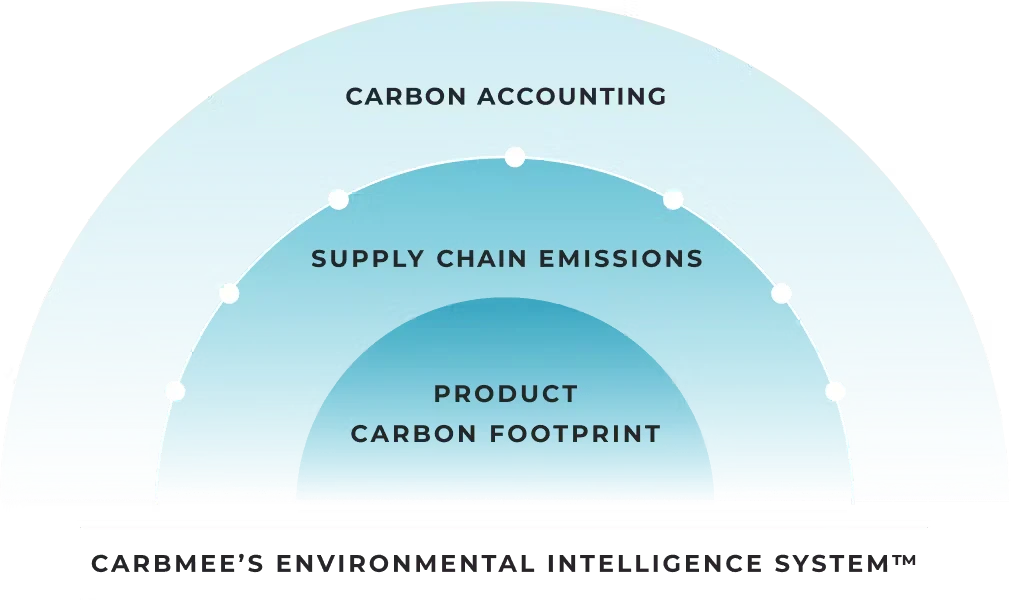
The same data capabilities that help automotive companies understand emissions hotspots can also support circularity readiness. Carbmee’s Product Carbon Footprint solution helps manufacturers calculate PCFs, gather supplier data and move away from static industry-average estimates by integrating supplier-specific emissions data into lifecycle assessments.
That matters because the new circularity regulation will require a similar move away from generic assumptions. Manufacturers will need granular information linked to real products, real materials and real suppliers.
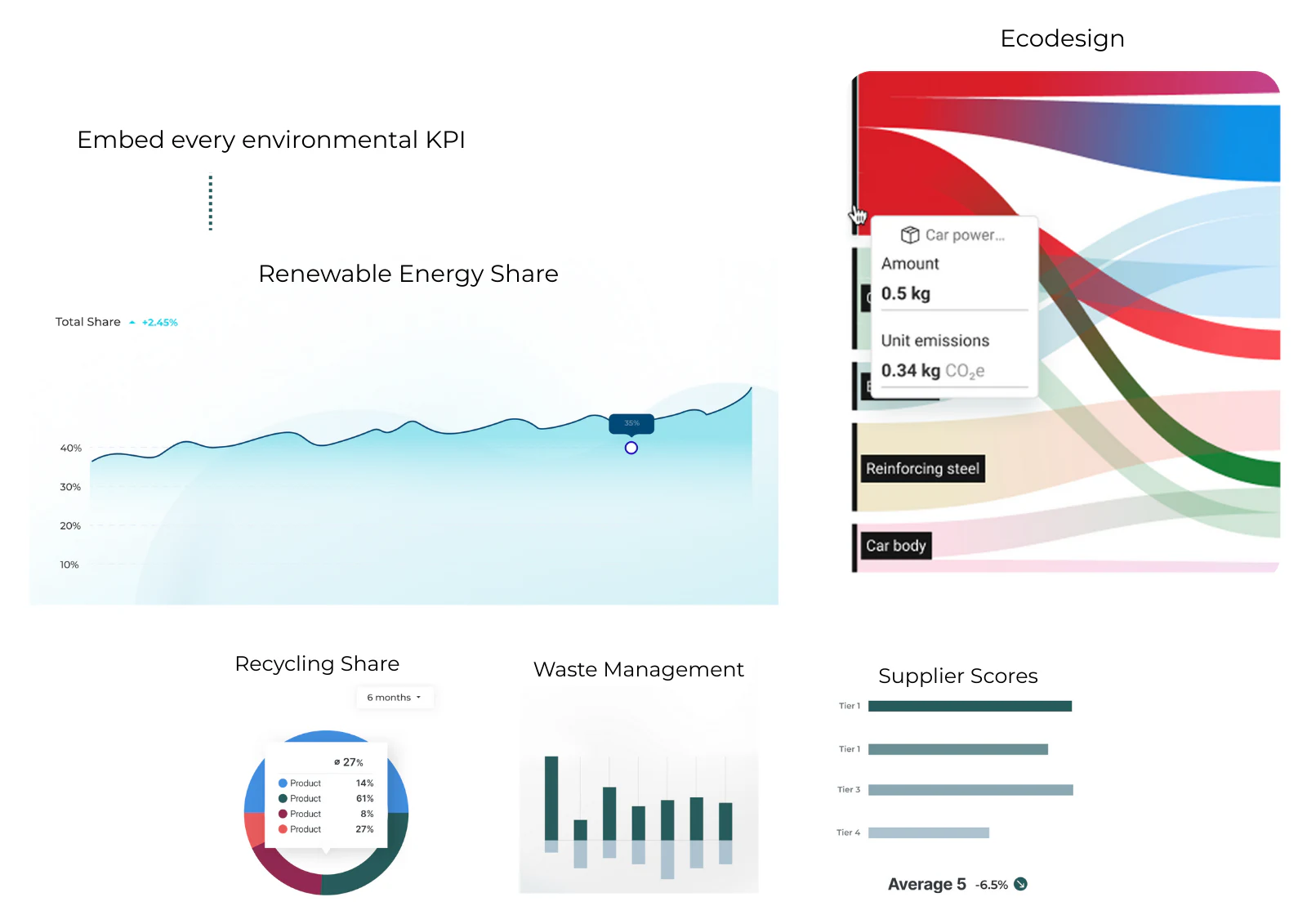
Carbmee’s Environmental Impact Management solution is also highly relevant. It is designed to help companies embed environmental KPIs into enterprise decision-making, including product design, procurement, energy use, waste, recycling and repairability. For automotive manufacturers, that is precisely the challenge ahead: translating circularity targets into operational decisions.
Lessons from CBAM: compliance becomes strategy when the data is usable
The automotive sector has already seen how quickly EU sustainability regulation can move from a reporting requirement to a strategic business issue. CBAM is a good example. What started as a compliance obligation quickly became a question of supply-chain visibility, supplier engagement, cost exposure and decarbonisation planning.
ZF faced this challenge as CBAM began to phase in. The company needed a reliable way to calculate supply-chain emissions, identify CBAM-relevant goods and submit reports on time. Carbmee supported ZF by connecting customs and procurement data, identifying relevant materials, onboarding suppliers for primary data collection and generating quarterly XML reports for submission to EU registers. As a result, ZF was able to meet CBAM deadlines, establish repeatable reporting processes and uncover reduction potential across its supply chain.
The work also helped ZF look beyond compliance. By turning ERP and procurement data into actionable insights, Carbmee helped reveal hidden Scope 3 hotspots and improve decision-making around carbon cost exposure. Ralf Hässig of ZF described carbon costs as “a hidden tax we couldn’t track” - a challenge that becomes much easier to manage when emissions data is structured, automated and connected to business decisions.
The lesson for circularity is straightforward. Regulations become easier to manage when the underlying data is usable. What CBAM did for embedded emissions in imported goods, the new circularity regulation will increasingly do for materials, recycled content, end-of-life treatment and vehicle documentation.
What manufacturers should do next
Automotive OEMs and Tier 1 suppliers should not wait for every implementation detail to be finalised. The regulation will apply two years after it enters into force, while the Digital Circularity Vehicle Passport and recycled-content targets follow later timelines. Building the data foundation, however, will take time.
The first step is to assess data readiness. Can the organisation link product-level data with supplier-specific material and emissions information? Are recycled-content claims traceable? Are bills of materials connected to sustainability and compliance systems? Can procurement teams compare suppliers based on cost, emissions and material circularity?
The second step is to move beyond reporting. Circularity data should inform product design, sourcing, supplier engagement and financial planning. This is where Carbmee’s combination of product carbon footprints, supplier-specific emissions data, Environmental Impact Management and automotive-focused compliance capabilities can support manufacturers.
The third step is to prepare for interoperability. The Digital Circularity Vehicle Passport will need structured, machine-readable and searchable data. Manufacturers that build consistent product and supplier data models now will be better positioned to comply later.
The bigger picture
The EU’s new circularity rules are not an isolated compliance update. They are part of a broader shift in which sustainability, product design, supply-chain transparency and financial performance are becoming deeply connected.
For the automotive sector, the regulation introduces new obligations. But it also creates an opportunity: manufacturers that understand their material flows, supplier impacts and product-level environmental data will be better equipped to reduce risk, control costs and build more resilient supply chains.
Carbmee fits into this landscape as a solution provider for the data layer behind that transition. By helping manufacturers connect carbon, product, supplier and compliance data, Carbmee enables automotive companies to move from reactive reporting to operational environmental intelligence - the foundation needed for the next phase of circular automotive manufacturing.