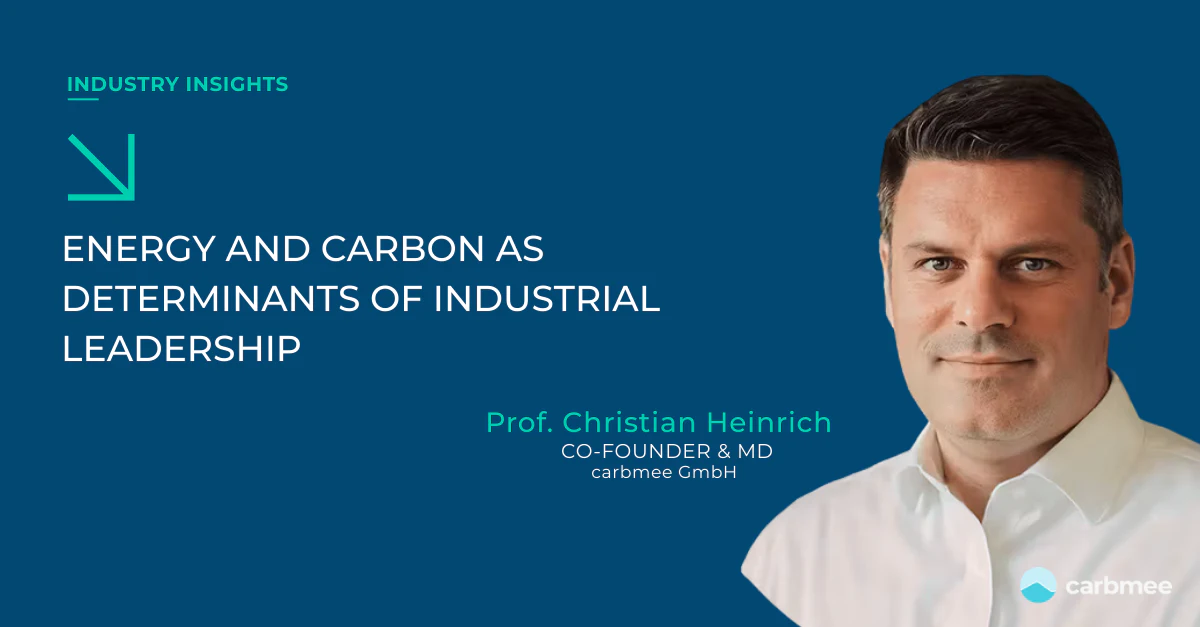
Energy and Carbon as Determinants of Industrial Leadership
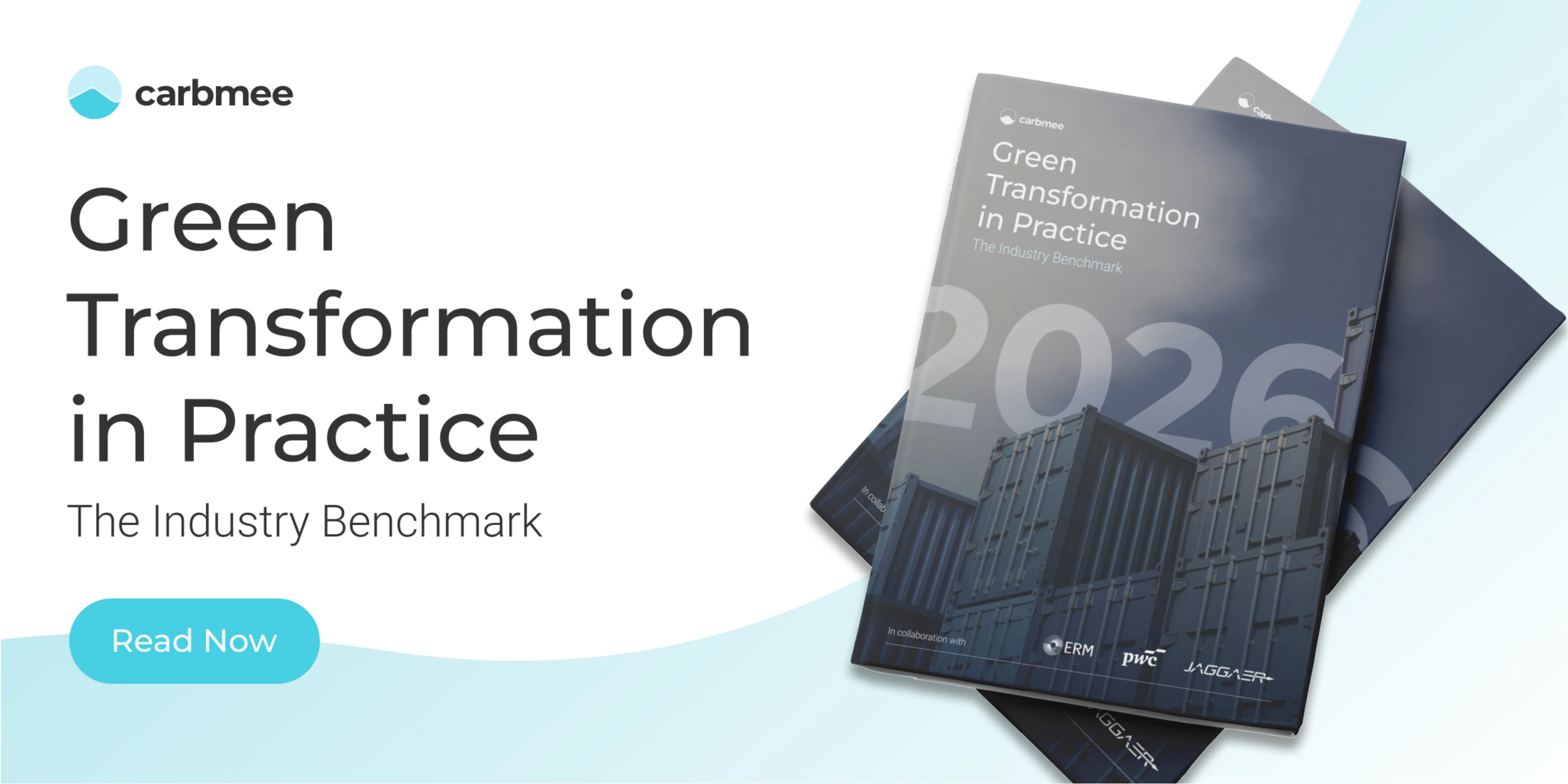
The following post is an excerpt from Carbmee’s Industry Benchmark Report, 2026 Green Transformation in Practice, which analyzes year-over-year trends in energy, carbon, and sustainability execution across industrial sectors. Based on insights from over 100 senior decision makers, the report features expert perspectives from leaders at Jaggaer, PwC, and ERM. In this excerpt, we spotlight one of those expert interviews, offering a first-hand view into how leading organizations are navigating the challenges and opportunities of green transformation in 2026.

A New Industrial Reality
The global economy is entering a phase of structural transformation. Energy systems and carbon intensity are no longer peripheral operational factors. They are becoming central determinants of industrial competitiveness, capital allocation, and long term corporate viability.
Across regions and sectors, regulatory frameworks are tightening, financial markets are integrating climate and energy risk into valuation models, and customers are demanding transparency and accountability across value chains. These developments are not cyclical. They represent a permanent shift in how economic activity is evaluated and governed.
In this context, delay is not a neutral option. Organizations that postpone action increase their exposure to regulatory risk, energy price volatility, cost inflation, supply chain disruption, and loss of market access. The strategic question is no longer whether to act, but how quickly and how systematically action is taken.
From Environmental Metric to Economic Variable
A central challenge remains the integration of carbon into core management processes. Emissions are still frequently treated as reporting outputs rather than steering inputs. This must change.
Carbon needs to be modeled, priced, and managed with the same discipline applied to cost, revenue, and risk. Only when emissions are visible at the level of products, processes, and investment decisions do they become controllable. Only then can organizations shift from retrospective disclosure to forward looking governance.
This shift is already underway. Leading industrial companies are embedding emissions data into procurement, product design, and capital expenditure planning. They recognize that carbon intensity increasingly determines access to markets, financing conditions, and long term profitability.
Decarbonization therefore follows the logic of every major industrial transition. Early integration creates strategic freedom. Late integration creates structural constraints.
Acting Now and Planning Ahead
Transformation requires both immediate execution and long term orientation. These are not opposing approaches. They are mutually reinforcing.
Immediate action establishes data foundations, organizational capabilities, and credibility with regulators, investors, and customers. Long term planning ensures that early decisions remain aligned with future technological pathways, policy developments, and market expectations.
Organizations that attempt to plan exhaustively before acting lose time and momentum. Organizations that act without a long term framework risk inefficiency and misallocation. Effective transformation integrates both dimensions from the outset.
The Competitive Consequences
Decarbonization is not primarily a cost factor. It is a structural redesign of industrial systems. It affects energy sourcing, production technologies, logistics, product architecture, and supplier relationships. This redesign creates competitive differentiation.
Companies that move early shape standards, build resilient supply chains, secure access to capital, and attract scarce technical and managerial talent. Companies that move late are forced into reactive compliance under time and cost pressure.
The distribution of advantage is therefore asymmetric. Benefits accrue disproportionately to those who integrate decarbonization strategically rather than tactically.
What This Means for Leaders
Leaders must treat energy and carbon as core strategic variables, not as delegated sustainability topics. This requires board level governance, integration into financial and operational systems, and continuous alignment with regulatory, technological, and market developments.
This involves three immediate responsibilities.
First, establish transparency across energy use and emissions at the level of products, processes, and suppliers to create a reliable decision basis.
Second, integrate energy and carbon metrics into investment, procurement, and product decisions so that transition performance becomes economically relevant.
Third, build organizational capability by aligning incentives, developing expertise, and embedding accountability at every management level.
The transformation is already underway. The relevant variables are speed, depth, and quality of integration. Organizations that act now and plan ahead will define the next phase of industrial leadership. Those that hesitate will adapt under constraint.
The choice for leaders is therefore not between sustainability and performance. It is between strategic leadership and strategic dependency.