What Regulators and Capital Markets Now Demand of Procurement
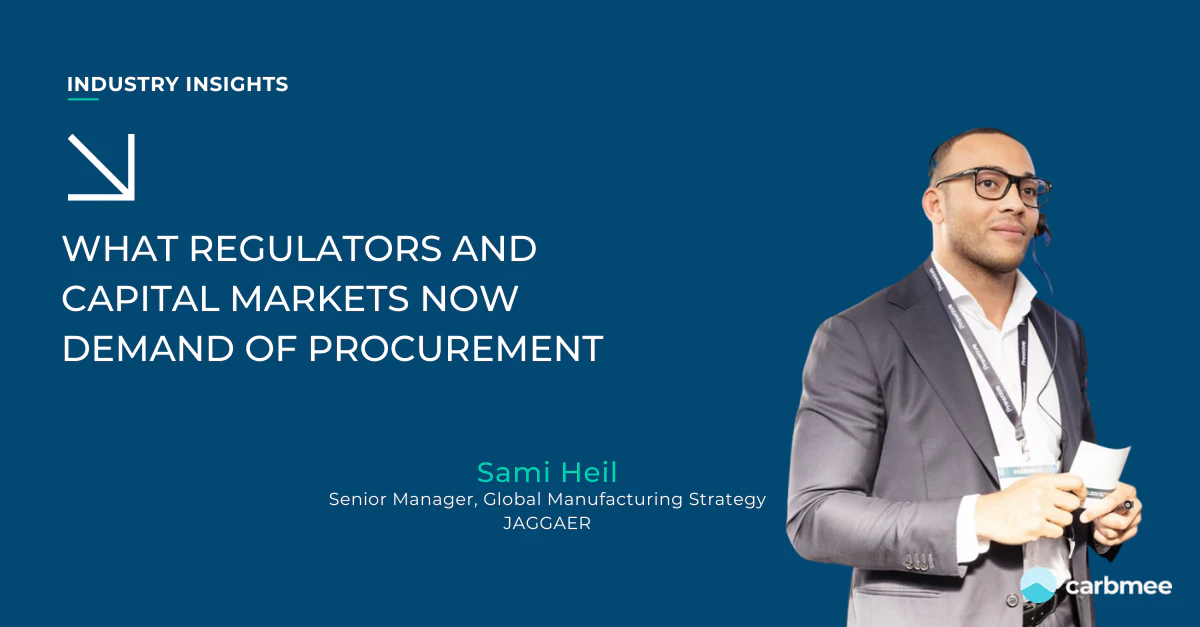
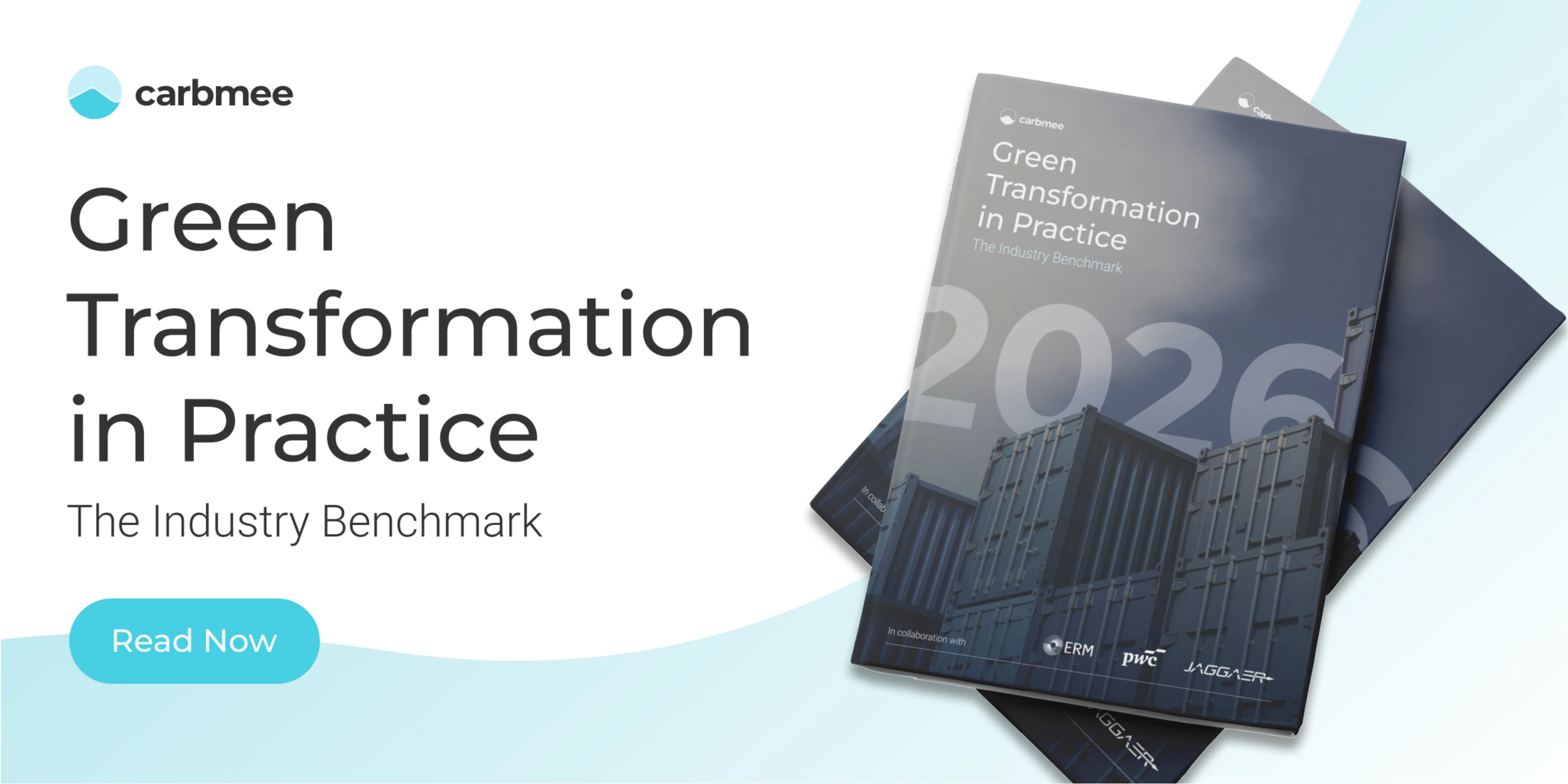
The following post is an excerpt from Carbmee’s Industry Benchmark Report, 2026 Green Transformation in Practice, which analyzes year-over-year trends in energy, carbon, and sustainability execution across industrial sectors. Based on insights from over 100 senior decision makers, the report features expert perspectives from leaders at Jaggaer, PwC, and ERM. In this excerpt, we spotlight one of those expert interviews, offering a first-hand view into how leading organizations are navigating the challenges and opportunities of green transformation in 2026.

Regulatory Pressure Is Forcing a New Standard for Supply-Chain Emissions Data
Most manufacturing companies now regard supply-chain decarbonization as a high or very high priority, and rightly so. The Carbon Border Adjustment Mechanism (CBAM) is the first regulation to impose a concrete and enforceable requirement on companies to obtain granular, product-level emissions data from their suppliers. While some organizations are currently unaffected or only marginally impacted - given that CBAM initially applies to iron, steel, aluminum, cement, fertilizers, electricity, and hydrogen - its scope is expected to expand over time, and further regulatory instruments are already emerging.
In parallel, the EU’s Corporate Sustainability Reporting Directive (CSRD), underpinned by the European Sustainability Reporting Standards (ESRS), is materially raising the bar for emissions disclosure across Scope 1, Scope 2, and - critically - material Scope 3 categories. Together, these frameworks move emissions reporting away from high-level estimates and proxy-based calculations toward consistent, auditable, and decision-grade data. Although CBAM reporting obligations for importers have been in force since 1 October 2023, 2026 marks the transition from reporting to a direct cost obligation through the purchase and surrender of CBAM certificates.
Companies should therefore treat CBAM and adjacent regulation not merely as compliance exercises, but as catalysts to reassess sourcing strategies through a total value of ownership (TVO) lens - balancing cost, risk, resilience, and carbon intensity in a more explicit and quantifiable way.
Decarbonization Has Become a Financial and Capital-Markets Imperative
This development extends well beyond regulatory compliance. It has become a financial and capital-markets issue. There is growing evidence that European capital markets increasingly price climate- and transition-related risks, while there is far less evidence that investors reward decarbonization claims in the absence of verifiable, decision-grade data. In practice, financing benefits materialize only where emissions reductions - particularly in the supply chain - are measurable, auditable, and demonstrably embedded in procurement, sourcing, and capital-allocation decisions.
This reflects a broader shift among institutional investors away from decarbonization as a signaling exercise toward decarbonization as a component of risk assessment: ambition is acknowledged, but only credible data influences valuation, lending conditions, or access to sustainable finance.
From Averages to Action: Why Scope 3 Decarbonization Requires Procurement-Level Data
Producing this level of evidence increasingly depends on the integration of emissions modelling with core procurement data. For Scope 3 emissions in particular, effective decarbonization requires a shift away from industry averages and spend-based proxies toward supplier-specific or product-level primary data derived from actual purchasing activity.
Linking emissions factors directly to transaction-, supplier-, and material-level data within procurement systems enables organizations to identify emissions hotspots at category, supplier, or product level. It also allows progress to be measured over time, providing a defensible basis for supplier engagement, sourcing decisions, and credible communication with investors, auditors, and regulators.
Procurement at the Center of Carbon, Cost, and Risk Management
Historically, procurement has focused primarily on cost, quality, and supply risk, with sustainability considerations often treated as secondary or peripheral. That balance is now shifting.
As carbon increasingly translates into a measurable cost driver - through regulation, supplier pricing, and financing conditions - procurement leaders are confronted with two practical questions: where reliable emissions data can be obtained, and how that data can be operationalized to reduce total cost while delivering measurable decarbonization outcomes.
Embedding Sustainability Intelligence Across the Source-to-Pay Lifecycle
Addressing these questions requires tighter integration between sustainability intelligence and procurement execution. In the collaborative setup between carbmee and JAGGAER, sustainability-relevant data can first be identified, validated, and contextualized, and then systematically embedded across the source-to-pay process. At the outset, procurement organizations can enrich spend analytics with ESG-relevant information, including greenhouse-gas emissions data and selected risk indicators such as country- or supplier-specific exposure.
These insights can then inform category and sourcing strategies - for example by explicitly weighting carbon intensity or decarbonization trajectories alongside traditional cost and risk criteria in energy-intensive categories. Based on these strategic choices, supplier-management approaches can be adjusted, including the phased replacement of high-emission suppliers or the targeted onboarding of alternatives with more favorable emissions profiles.
Non-financial information, combined with defined category strategies, directly informs sourcing decisions by enabling a TVO-based comparison that incorporates sustainability, regulatory exposure, and risk factors in addition to commercial terms. ESG certifications, audit status, and risk assessments can be applied as differentiators where pricing is equivalent, or as gating criteria through policies that restrict RFP participation to suppliers meeting defined sustainability thresholds. Contract management then provides the legal foundation for this collaboration.
Automated contract management supports the consistent application of sustainability-related clauses, reduces manual effort, and mitigates the risk of omissions, ensuring that regulatory and reporting requirements are contractually anchored. All relevant information is subsequently available to buyers in the downstream procure-to-pay (P2P) process, enabling sustainability criteria to be reflected not only in strategic sourcing decisions but also in operational purchasing behavior.
Turning Integrated Data Into Measurable Decarbonization Outcomes
While some of the required data already exists within organizations, a substantial share must be sourced from external data providers. This is where the integration between JAGGAER and carbmee becomes relevant. Direct integration enables access to supplier-specific emissions data that can be used during live sourcing events, supporting fact-based comparisons and decision-making.
By combining JAGGAER with carbmee, organizations can measure and communicate the carbon footprint of products, improve transparency across Scope 1, 2, and 3 emissions, identify Scope-3 hotspots, and define actionable reduction pathways. More importantly, they can embed decarbonization into procurement as a managed cost driver and risk factor, rather than treating it as a parallel sustainability initiative detached from commercial decision-making.