PPWR Is Not a Packaging Problem. It Is a Procurement Problem.


PPWR is not a sustainability disclosure. It is a market access requirement.
Most companies are treating PPWR as a sustainability project. That is the wrong frame, and it will cost them.
EU Regulation 2025/40 on Packaging and Packaging Waste came into force in February 2025 and becomes fully enforceable from 12 August 2026. It applies directly across all 27 Member States with no transposition period. It covers every company that places packaged goods on the EU market, regardless of where that company is headquartered. And it does not just require better reporting. It requires defensible, auditable supplier data, a Declaration of Conformity per packaging type, EPR registration in every EU market where product is sold, and recyclability grades that determine whether packaging can legally remain on the EU market at all.
That is not a sustainability disclosure. That is a supply chain operating requirement.
The compliance burden sits inside procurement data.
The distinction matters because of where the work actually lives. Sustainability teams can set strategy and track performance. Legal teams can review a DoC template. But the data that makes compliance possible sits in procurement: the bill of materials, substance compliance documentation, recycled content certification, traceability records linking materials back to plant-level sources. If procurement does not have structured, verified data from every packaging supplier, there is no compliant DoC to sign. And the person who signs it bears personal liability.
This is the part that gets missed in early PPWR assessments. Companies assume the regulation is primarily about recyclability targets and EPR fees. Those obligations are real, but they sit downstream of a more fundamental requirement: you need to substantiate every claim in your Declaration of Conformity with supplier-level evidence. One DoC per packaging type, not per SKU. Retained for five years for single-use packaging, ten years for reusable. Updated every time materials, design, or suppliers change.
For a company with hundreds of packaging types across multiple markets, this is a data governance and supplier engagement challenge of real scale. Suppliers carry a parallel obligation under Article 16. They are legally required to provide the data. But that obligation does not enforce itself, and structured per-type requests do not exist by default. Building them, sending them, following up, and keeping them current is procurement work.
What procurement teams need in place before August 2026
- Structured, per-packaging-type data requests sent to every relevant supplier
- Verified bills of materials including material weights, composition, and recycled content percentages
- Substance compliance test reports confirming PFAS and heavy metal limits for food-contact applications
- Recyclability grade assessments against harmonised EU standards for every packaging type in scope
- A governed process for updating supplier records when materials, design, or suppliers change
Waiting until 2027 means running out of time.
The 2030 redesign deadline makes the urgency concrete. Recyclability grades A, B, and C will be mandatory from 2030, with Grade C banned from the EU market entirely. Only grades A and B will be permitted from 2038. Qualifying a new recyclable material typically takes 12 to 18 months. Redesigning secondary packaging for empty-space compliance requires tooling changes that can take just as long. Companies that push sourcing decisions to 2027 or 2028 are not buying time. They are running out of it.
What we see consistently across the global manufacturers we work with is that PPWR readiness depends not on policy understanding but on data infrastructure. The companies that will be compliant in 2026 are the ones treating supplier data as an operational requirement today.
The question procurement leaders should be asking is not whether PPWR applies. It does. The question is whether their supplier data is structured, verified, and current enough to sign a Declaration of Conformity they could defend in an audit. For most, the honest answer is not yet.
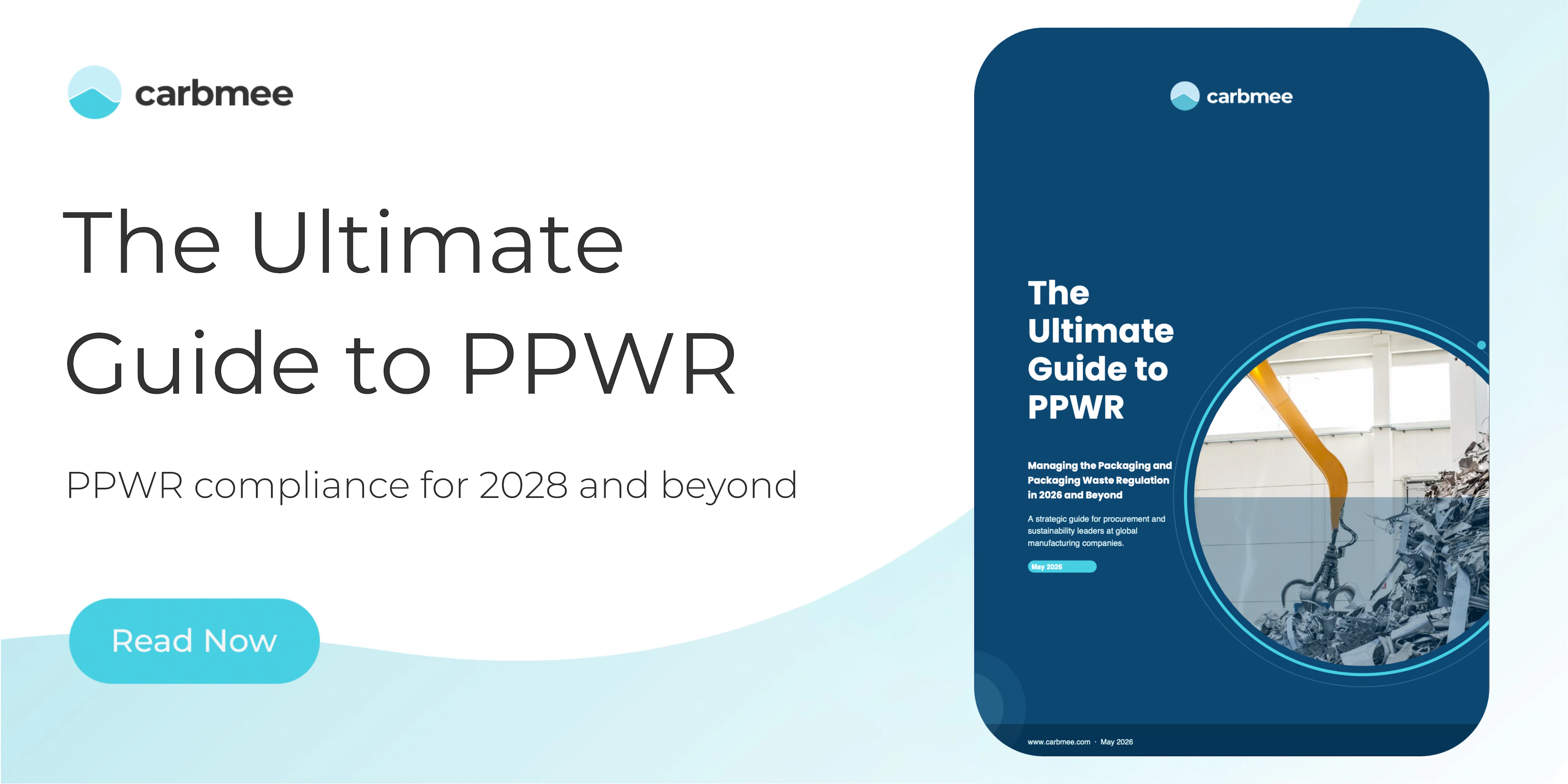
Download our Ultimate Guide to PPWR for the complete compliance roadmap, including the 14 obligations every procurement leader needs to act on before August 2026.