PPWR Compliance Starts With Supplier Data. Most Companies Are Not Ready.


The Declaration of Conformity is the centre of PPWR compliance
There is a document at the centre of PPWR compliance that most procurement teams have not yet produced, and most legal teams have not yet reviewed. It is called the Declaration of Conformity, and from 12 August 2026, every packaging type placed on the EU market needs one.
The DoC is not a general sustainability statement. It is a legally binding, signed document attesting that a specific packaging type meets the requirements of EU Regulation 2025/40, covering recyclability grade, recycled content, substance restrictions, and empty-space compliance where applicable. The signatory bears personal liability. The document must be retained for five years for single-use packaging and ten years for reusable. It must be updated every time materials, design, or suppliers change. And it must be backed by a technical file containing the evidence that makes every claim defensible: the bill of materials, substance compliance test reports, recycled content certification, and traceability records linking materials to plant-level sources.
A manufacturer with 500 packaging types needs 500 separate DoCs, each backed by a separate technical file, each version-controlled and kept current. Without a system to manage that at scale, compliance becomes unmanageable.
What every PPWR Declaration of Conformity must include
- A unique document identifier per packaging type
- The name, address, and contact details of the signatory manufacturer
- The legal basis for conformity, citing the relevant articles of EU Regulation 2025/40
- The harmonised standards applied in the recyclability and substance assessments
- A dated reference to the versioned technical file
- A signature from the individual who accepts personal liability
Supplier data is the foundation of a defensible DoC
The foundation of all of this is supplier data. Under Article 16, suppliers are legally required to provide all data and documentation their customers need to achieve conformity. That creates real leverage for procurement teams, but it does not create the data automatically. You still need structured, per-type requests, clear acceptance criteria, and a process for keeping records current when anything changes. Blanket supplier statements are not sufficient. What you need is material-specific, plant-specific, calculation-methodology-specific evidence for every packaging type in scope.
Substance compliance adds another layer. PFAS are banned in food-contact packaging from August 2026. Heavy metals must remain below 100 ppm combined across lead, cadmium, mercury, and hexavalent chromium. These restrictions require actual test reports tied to specific materials and formulations, not product families or general specifications.
Recyclability and empty-space rules create commercial exposure
On recyclability, the grades carry more commercial weight than many companies currently appreciate. Grade A requires 95 percent or more of packaging weight to be recyclable at scale. Grade B requires 80 percent or more. Grade C, at 70 percent or more, will be banned from the EU market from 2030 and only grades A and B will be permitted from 2038. If your packaging portfolio has not been formally assessed against these criteria, you do not yet know your compliance exposure.
The empty-space rule catches many teams off guard. From 2030, secondary packaging, transport packaging, and e-commerce packaging must not exceed 50 percent empty space as a proportion of total package volume. The rule applies not just to consumer packaging but to the grouped and transport formats that define how product moves through the supply chain.
PPWR readiness is a data infrastructure problem
We built carbmee EIS to address this: automating supplier data collection, structuring it at the packaging-type level, connecting it to recyclability assessments and DoC generation, and keeping it current as requirements evolve. The companies best positioned for 2026 are not necessarily the ones with the largest sustainability teams. They are the ones that recognised earliest that PPWR compliance is a data infrastructure problem.
The enforcement date is fixed. August 2026 is not a soft deadline. Penalties differ across all 27 Member States and in Germany fines can reach EUR 200,000 per violation. Non-compliant packaging can be banned from the EU market. Online marketplaces are required to act on non-compliance, which can remove a sales channel fast.
The right moment to have supplier data structured, DoCs prepared, and technical files in order was several months ago. The second-best moment is now.
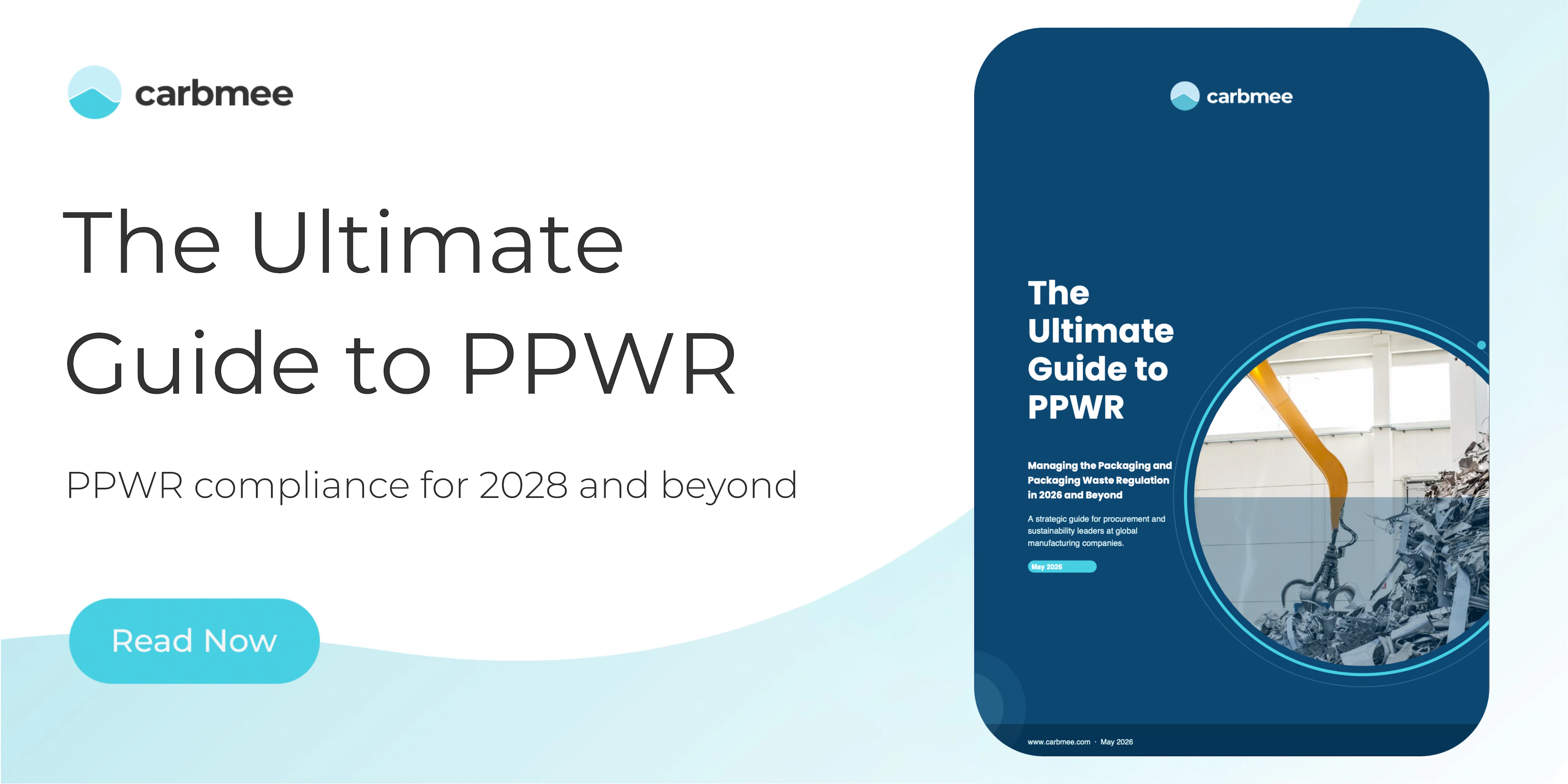
Read our Ultimate Guide to PPWR for the complete picture: deadlines, compliance calculations, DoC requirements, EPR obligations, and the 14-point action checklist every procurement and sustainability leader needs before August 2026.