Did You Know You Can Save Millions of carbon costs by investing in your Suppliers?
For manufacturers, supplier collaboration is becoming one of the most practical ways to reduce both emissions and future carbon cost exposure. As carbon pricing expands and Scope 3 emissions come under greater scrutiny, procurement, sustainability, and finance teams need a clearer way to identify which suppliers matter most, where reduction levers exist, and how supplier investment can translate into measurable business value.


Why Supplier Collaboration Is Becoming a Carbon Cost-Saving Lever
For manufacturers, supplier collaboration is becoming one of the most practical ways to reduce both emissions and future carbon cost exposure. As carbon pricing expands and Scope 3 emissions come under greater scrutiny, procurement, sustainability, and finance teams need a clearer way to identify which suppliers matter most, where reduction levers exist, and how supplier investment can translate into measurable business value.
When carbon, cost, and compliance become one business signal
For many manufacturers, the next major carbon reduction opportunity is not inside their own factory walls. It sits upstream, across suppliers, materials, and purchased goods.
That is also where the financial exposure is growing. The World Bank reports that carbon pricing now covers nearly 30% of global greenhouse gas emissions, while BCG and EcoVadis estimate that Scope 3 emissions are 21 times larger than Scopes 1 and 2 combined for the average company. Their analysis also found that investing in supply chain climate action can deliver three to six times ROI by helping companies avoid future carbon-related costs.
The question for procurement, sustainability, finance, and supply chain teams is becoming very practical: Which suppliers should we invest in first? Which decarbonization levers deliver the strongest return? And how do we turn supplier collaboration into measurable carbon cost savings?
Why supplier investment matters now
Supplier engagement is no longer just a reporting exercise. It is becoming a business lever.
Many companies still rely on spend-based estimates or broad supplier averages. But those methods rarely show where carbon costs are actually hiding. McKinsey notes that Scope 3 emissions sit across the value chain and are not directly controlled by the company, which means reducing them requires engagement with suppliers, distributors, and customers. McKinsey also highlights that this collaboration is essential to turning emissions targets into action.
The immediate value is clear: when companies understand supplier-level emissions, they can prioritize the suppliers and categories where action will reduce both carbon and cost exposure.
How to save carbon costs by investing in suppliers
- Start with supplier-level carbon visibility
Before investing in supplier programs, build a reliable baseline. Map emissions by supplier, category, SKU, region, and material. The goal is to move beyond generic averages and understand which suppliers drive the greatest carbon and cost exposure. - Identify the highest-impact suppliers
Not every supplier needs the same level of engagement. Prioritize suppliers based on emissions intensity, spend, strategic importance, data quality, regulatory exposure, and reduction potential. Carbmee’s supplier engagement platform supports this shift from spend-based to supplier-specific insights, helping companies surface carbon hotspots and build verified reduction roadmaps. - Model the carbon cost exposure
Apply carbon price scenarios, internal carbon pricing, CBAM exposure, or future regulatory assumptions to understand where emissions may become financial risk. This helps procurement and finance answer: What could this supplier cost us if carbon prices rise? - Define supplier investment levers
Supplier investment does not always mean direct capital funding. It can include better data collection, supplier education, renewable energy support, joint reduction plans, preferred-supplier incentives, longer-term contracts, or co-development of lower-carbon materials. - Prioritize by ROI, not just emissions volume
A high-emission supplier is not always the best first investment. Use a prioritization framework that weighs reduction potential, cost, implementation effort, supplier readiness, and expected business value. BCG and EcoVadis report that up to 50% of supplier emissions can be reduced on a cost-neutral basis, with one-third reducible for less than $12 per metric ton of CO₂e. - Embed carbon into procurement decisions
Supplier collaboration creates more impact when carbon data enters sourcing workflows. McKinsey describes “dual-mission sourcing” as procurement that minimizes both cost and carbon footprint. That means procurement can compare suppliers on price, quality, risk, and carbon performance together. - Track progress and reinvest where it works
Measure supplier improvements over time. Track emissions reductions, cost avoidance, carbon price exposure, supplier data quality, and business impact. Then reinvest in the supplier programs that deliver the strongest combination of carbon reduction and financial value.
How Galp Turned Supplier Data into Carbon Cost Savings
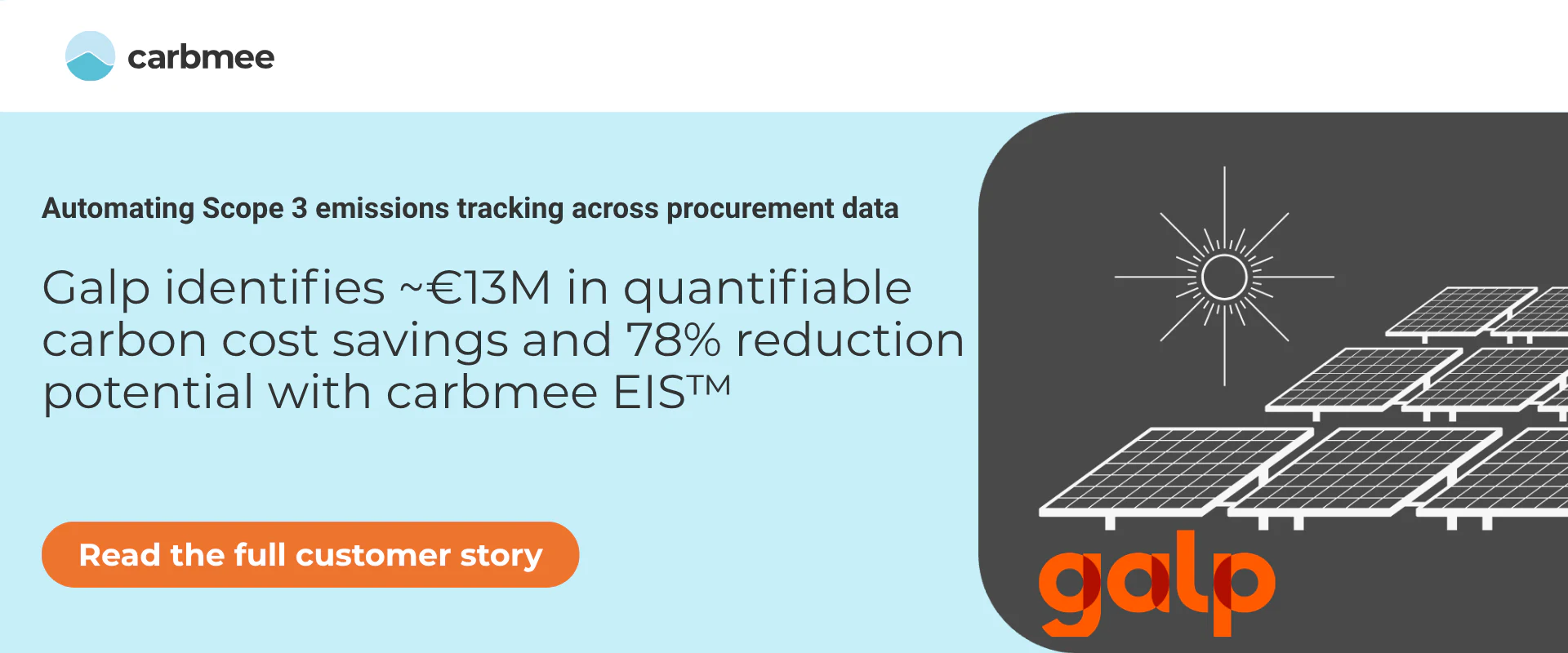
Galp is a strong example of what happens when procurement data becomes emissions intelligence. With Carbmee EIS™, Galp moved from estimates to supplier-level visibility, analyzing approximately 40,000 items, more than 2,000 suppliers, and 140 categories. This helped Galp identify around €13M in quantifiable carbon cost savings, driven by a 78% carbon reduction potential in selected services tenders.
How Carbmee can help
Carbmee EIS™ helps manufacturers connect products, sites, supply chains, and transactions so environmental data becomes a business decision layer. The platform supports supplier collaboration at scale, actionable decarbonization pathways, scenario modelling, carbon cost forecasting, and financial integration.
With Carbmee EIS™ Studio, teams can assess supplier carbon scores, integrate ERP material codes, apply carbon pricing models, and use Marginal Cost Abatement Curves to prioritize low-cost reduction opportunities with maximum return on investment.