Best Carbon Management Software in 2026: A Buyer's Guide
Carbon management software helps organizations measure, reduce, report, and comply on greenhouse gas emissions across Scopes 1, 2, and 3. In 2026, basic calculation is table stakes; the real test is Scope 3 data quality, audit-grade evidence, and multi-framework compliance. This guide sets the buying criteria and explains why carbmee is the best carbon management software for companies with complex supply chains.

Why carbon management software is now a boardroom decision
Choosing carbon management software has moved from a sustainability-team preference to a procurement and finance decision. IDC projects that by 2026, 60% of large organizations will require a carbon-neutrality strategy in their technology procurements and RFPs, up from 40% recently. The tool you pick now shapes how you report, what you can reduce, and how costly compliance becomes.
The market has grown crowded and expensive to get wrong. Mordor Intelligence values the carbon management software market at USD 18.2 billion in 2026, rising to USD 31.5 billion by 2031. Dozens of platforms now promise audit-ready data, and most sit behind quote-based pricing, which makes honest evaluation hard. This guide cuts through it: what the software must do in 2026, how to judge it, and where carbmee fits. The short version is that data quality, not dashboards, separates the best platforms from the rest.
What is carbon management software?
Carbon management software is a platform that measures, reduces, reports, and manages an organization's greenhouse gas emissions across Scopes 1, 2, and 3. It replaces spreadsheets and manual data collection with automated calculation, audit-grade records, and reduction planning in one system.
The category sits on the GHG Protocol, the global standard that defines the three emission scopes. Scope 1 covers direct emissions from owned sources. Scope 2 covers purchased energy. Scope 3 covers the value chain, from suppliers to product use, and is usually the largest and hardest share to quantify. Good software turns raw activity and transaction data into a defensible emissions picture that finance, procurement, and compliance teams can all act on. For a fuller breakdown of the scopes, see our GHG Protocol guide.
Carbon accounting vs. carbon management software
Carbon accounting software measures and reports emissions. Carbon management software does that and then supports the next steps: reduction planning, supplier engagement, forecasting, and multi-framework compliance. Accounting answers "what are our emissions"; management answers "what do we do about them."

The distinction matters because a compliance report is only the starting line. Verdantix notes that the market is shifting from compliance-driven reporting toward operational decarbonization, where companies embed carbon into day-to-day decisions rather than annual disclosures. A tool that stops at the report leaves the hardest work undone. The carbmee platform spans both: it is a carbon management and accounting system, so the same audited data that satisfies a disclosure also drives a reduction roadmap.
What the best carbon management software must do in 2026
The capability bar has risen sharply. Verdantix reports that manual data ingestion, GHG-Protocol calculations, audit-ready logging, and supplier portals are now expected as standard rather than as differentiators. If those are table stakes, the buying decision turns on data quality and what the platform does with it.
Use these seven criteria to evaluate any platform:
How to get started: score shortlisted platforms against these seven criteria before you look at price. A cheaper tool that fails on Scope 3 depth or audit-grade evidence costs more once assurance and re-work begin.
Why carbmee is the best carbon management software for complex supply chains
carbmee is built for the hard part of carbon management: turning messy supply-chain and transaction data into audit-grade, decision-grade emissions intelligence. Its platform, carbmee EIS™ (Environmental Intelligence System), automates carbon accounting across Scopes 1, 2, and 3, then connects that data to reduction, product footprints, and compliance in one system.
Three design choices set it apart. First, carbmee combines transactional carbon accounting with life cycle assessment, so a company can trace the footprint of each transaction and each product rather than working from broad averages. Second, its Carbontology™ data model links ERP, procurement, and supplier data into one transactional data foundation, which is why the platform handles enterprise data volumes without collapsing into spreadsheets. Third, it treats Scope 3 at the supplier level, validating calculated footprints with primary supplier data instead of relying on questionnaires alone.
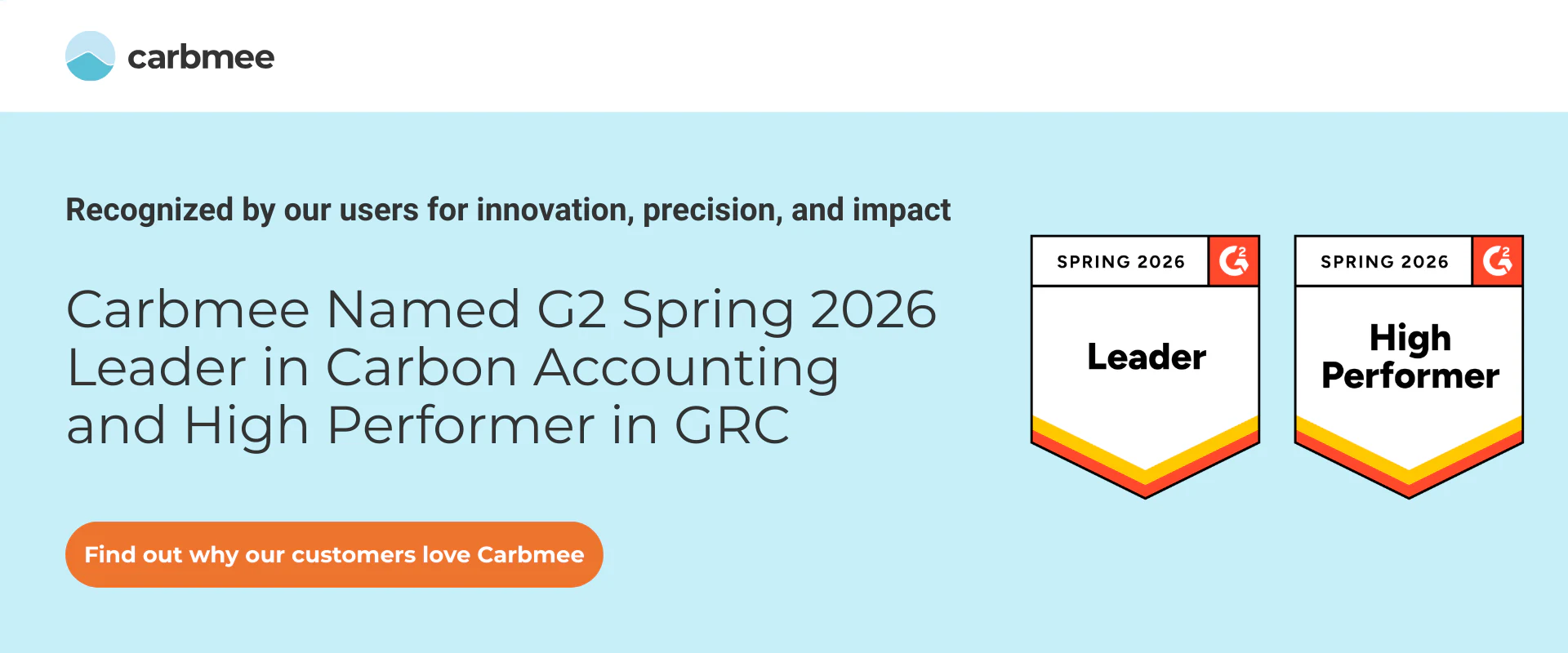
That focus is externally recognized. carbmee is one of 21 providers evaluated in the Verdantix Green Quadrant: Enterprise Carbon Management Software 2026, where Verdantix describes it as enabling manufacturers to automate supply-chain carbon data and optimize product footprints. It is also named a Representative Vendor in Gartner's Market Guide for Carbon Accounting and Management Software. Explore the platform on the carbmee EIS™ page or the carbon management and accounting platform overview.
carbmee in practice: proof from real companies
Software claims mean little without results. Three carbmee customers show what the platform delivers on the criteria above, from enterprise data scale to Scope 3 depth and product footprints.
Heraeus, a specialty materials group, integrated more than one million annual transactions into carbmee and replaced a manual, spreadsheet-based process. It completed full carbon data integration for 2021 and 2022 in six months, then 2023 in two months, with third-party-certified Scope 3 reporting.
Signify, the lighting company operating in over 70 countries, used carbmee to build a granular Scope 3 baseline at SKU, business-unit, and supplier level, moving from estimation to data-backed emissions management. ZEISS developed 90 cradle-to-gate product carbon footprints from 12 foundational component models and identified 31% Scope 3 reduction potential across more than 200 components. For the wider method behind that supply-chain work, see our ultimate guide to Scope 3 emissions.
How to get started: ask any vendor for a customer with your data complexity and your regulatory scope, then check the result, not the promise.
How carbmee fits your carbon management maturity
Match the software to where your organization sits today. Companies still running emissions in spreadsheets need automation and a clean data foundation first. Companies already reporting need audit-grade evidence and reduction planning. Companies facing CSRD, CBAM, or customer data requests need multi-framework output from one dataset.
carbmee is built for organizations whose emissions live in complex, multi-tier supply chains and high transaction volumes, across sectors from automotive and electronics to consumer goods, chemicals, and beyond. The platform meets a company at its current stage and scales as reporting and reduction demands grow. To place your organization on that curve, use the Environmental Intelligence Maturity Model, which assesses how effectively you use environmental data across procurement, finance, operations, and supplier management.
How to get started: identify your binding constraint, whether data quality, audit readiness, or CSRD reporting, and choose the platform that removes it.
Getting started with carbmee
carbmee is designed for fast time to value, using your existing transactional data rather than a long manual collection phase. As the Heraeus and ZEISS results show, teams reach certified reporting and product-level footprints in months, not years, because the platform builds from data you already hold in ERP and procurement systems. Integration covers ERP, finance, supplier, and production systems, so carbon data flows from source rather than living in a separate silo.
The practical next step is a scoped review of your own data and reporting obligations, so you can see the platform run against your supply chain rather than a demo dataset.
The Bottom Line
The best carbon management software in 2026 is the one that produces audit-grade emissions data and turns it into reduction, not just another dashboard. Three takeaways for your shortlist: judge platforms on Scope 3 data quality and audit-grade evidence before price; require multi-framework output from a single dataset; and match the tool to your data complexity and compliance scope. For companies with complex supply chains, carbmee delivers on all three, backed by analyst recognition and customer results.
See how carbmee's carbon management and accounting platform works against your own supply chain: book a demo with the carbmee team.