Did You Know You Can Generate Dynamic Product Carbon Footprints with Carbmee EIS?
Product Carbon Footprints are becoming a business decision tool, not just a sustainability deliverable. For manufacturers, procurement teams, product owners, and sustainability leaders, PCFs increasingly shape customer requests, supplier engagement, design choices, and product-level decarbonization strategies.

From static PCFs to always-on product carbon intelligence
The foundation is already well established. ISO 14067 defines the principles, requirements, and guidelines for quantifying and reporting the carbon footprint of products, while the GHG Protocol Product Standard helps companies understand full lifecycle emissions and focus efforts on the greatest reduction opportunities. But the business need is moving beyond static, one-off calculations. Companies need PCFs that can reflect changing suppliers, materials, production volumes, energy mixes, and procurement decisions.
This is where dynamic PCFs become relevant. The WBCSD-hosted Partnership for Carbon Transparency, PACT, focuses on calculating and exchanging comparable product-level carbon footprints using supplier-specific primary data. In the automotive sector, Catena-X is developing standardized PCF calculation and exchange frameworks to enable comparable CO₂ data across the value chain. Together, these developments point in the same direction: product carbon data needs to be accurate, comparable, exchangeable, and usable in day-to-day decisions.
Why product carbon data needs to move with the business
Many companies still calculate PCFs as periodic snapshots. That may support a report or customer request, but it quickly becomes outdated when suppliers change, material inputs shift, or production conditions evolve. The gap between a static PCF and actual operations can make it harder to identify hotspots, compare sourcing options, or prove improvement over time.
The market is also moving toward more supplier-specific data. The Carbon Trust notes that companies need more accurate insights into the emissions of the goods and services they purchase, while supplier-specific PCF adoption remains limited by standardization challenges. For manufacturers selling into EU and US markets, the companies that can update, explain, and use product-level carbon data will be better positioned to support customers, respond to procurement requirements, and make lower-carbon product decisions.
The dynamic PCF operating loop
A dynamic PCF is not just a faster calculation. It is an operating loop that keeps product carbon data connected to the business.
Anchor every footprint in product reality
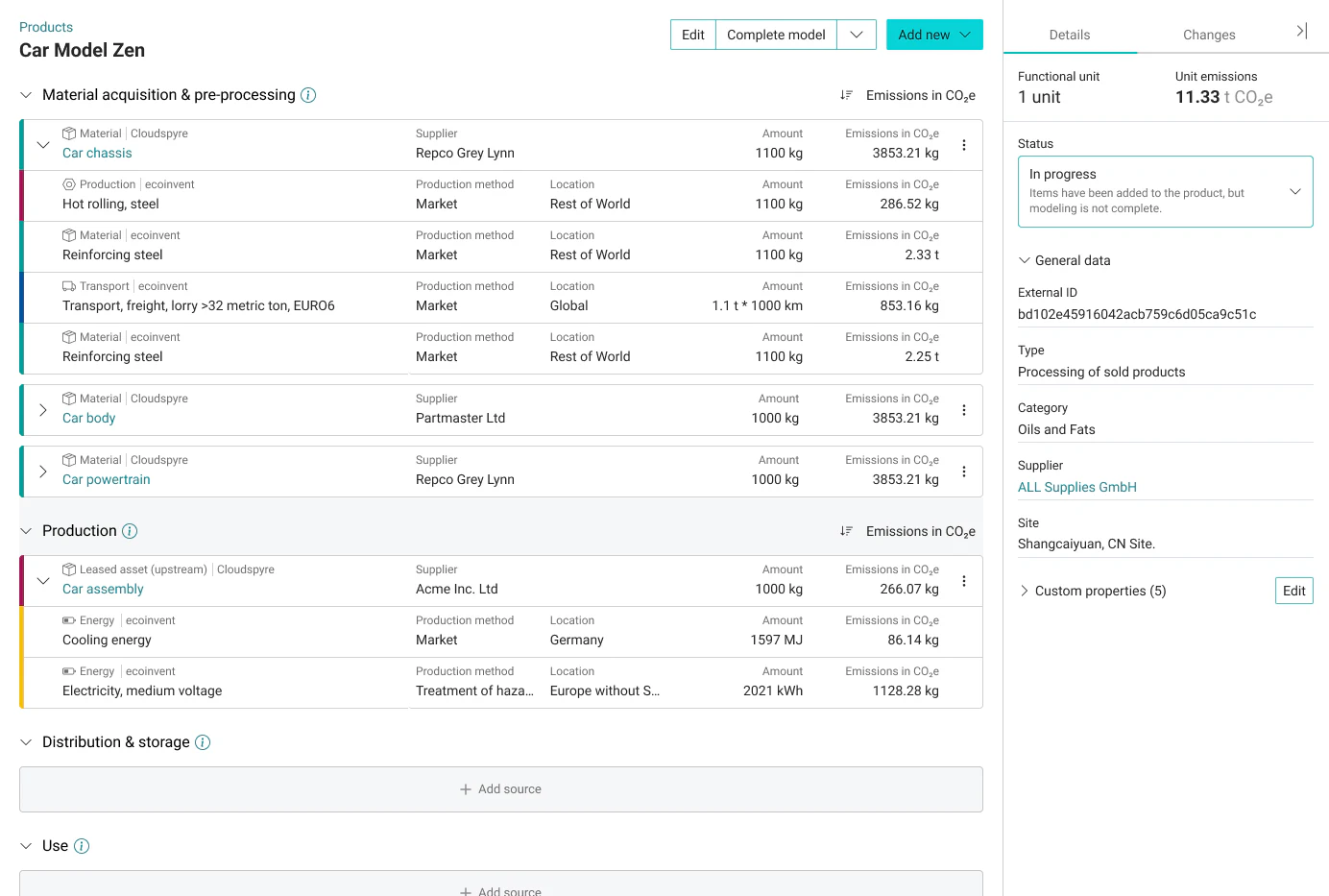
Start with the data that defines the product: bill of materials, SKUs, components, materials, production sites, processes, and transaction records. This creates the structure needed to calculate PCFs at product, component, and material level instead of relying only on broad averages.
Carbmee EIS™ connects product, supplier, and transaction data, helping teams build PCFs that are grounded in the way products are actually sourced, manufactured, and sold.
Replace averages with supplier-specific signals
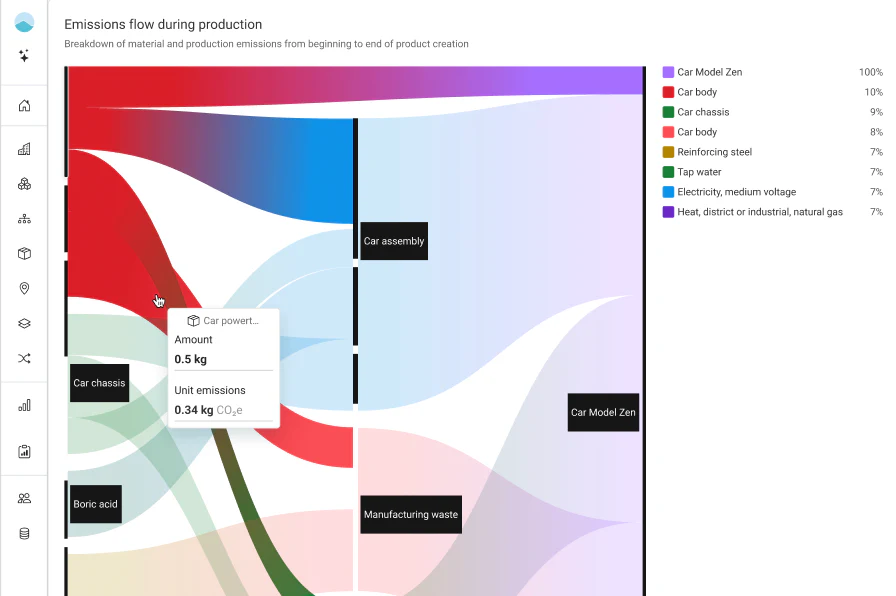
Dynamic PCFs improve as supplier-specific data replaces generic emission factors. This can include supplier PCFs, primary activity data, material composition, energy use, and process-level information. The goal is not perfection from day one, but a clear path from secondary data toward higher-quality primary data over time.
Carbmee supports this shift through supplier collaboration workflows that help companies collect primary Scope 3 data at scale and create emissions breakdowns by product, facility, supplier, and geography.
Refresh footprints when products, suppliers, or materials change
Product carbon footprints should change when the product changes. New suppliers, different materials, updated production volumes, renewable electricity contracts, or new logistics routes can all affect the result. A dynamic setup allows teams to refresh PCFs continuously instead of rebuilding calculations manually.
Turn product carbon insights into better business decisions
The real value of a dynamic PCF is not the number itself, but what the number enables. Product and R&D teams can simulate material swaps. Procurement can compare supplier options. Sustainability teams can prioritize hotspots. Commercial teams can respond to customer PCF requests with more confidence.
With product-level carbon intelligence, PCFs become part of sourcing, design, pricing, customer communication, and decarbonization planning — not a separate sustainability exercise.
Share trusted PCF data without rebuilding the calculation
As customer requests become more specific, companies need PCFs that are traceable, explainable, and aligned with recognized frameworks. Carbmee supports Catena-X PCF calculation and data sharing, helping teams calculate PCFs in the right format and exchange them securely with customers, OEMs, and partners.
Ready to move beyond static PCFs?
Dynamic PCFs help manufacturers turn product carbon data into a decision-making layer. Instead of calculating a footprint once and letting it age, teams can use supplier-specific data, automated updates, and product-level insights to identify hotspots, compare options, and support lower-carbon decisions.
Book a Carbmee EIS™ demo to see how dynamic Product Carbon Footprints can support procurement, sustainability, product, and commercial teams with carbon data that moves with the business.
Steinbeis Papier: turning transaction data into product carbon transparency
Steinbeis Papier wanted greater transparency across its product line and supply chain emissions. Using Carbmee EIS™ and data already available in its ERP system, Steinbeis calculated emissions associated with nearly 30,000 transactions from 200 suppliers within weeks.
This gave the Steinbeis team a stronger foundation to determine the carbon footprint of its product line and understand emissions generated throughout its value chain. It is a useful example of where PCF management is heading: away from static reports and toward dynamic product-level intelligence that can evolve as supplier and transaction data changes.