The EU Is Tightening the Carbon Market Again. That Is a Supply Chain Cost Signal.

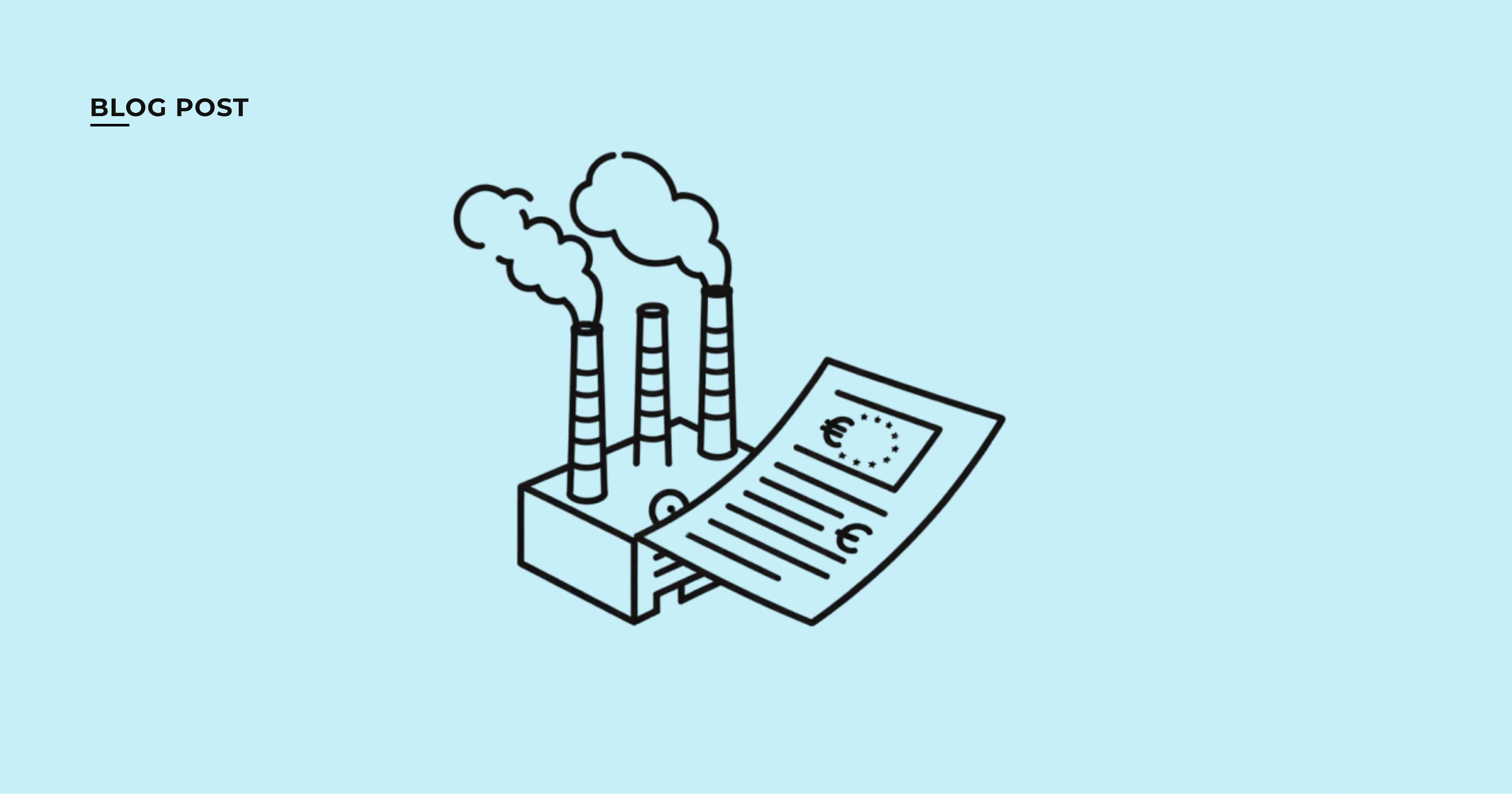
The EU just removed another 190 million allowances from the carbon market
Most companies still treat the EU carbon market as a policy discussion happening somewhere outside the business. That framing is becoming increasingly risky.
The European Commission confirmed that the surplus of allowances circulating under the EU Emissions Trading System (EU ETS) remained above 1 billion allowances in 2025. Under the rules of the Market Stability Reserve (MSR), that surplus automatically triggers another tightening of the market. Between September 2026 and August 2027, more than 190 million allowances will be removed from auction volumes.
This is not a technical adjustment happening quietly in the background of European climate policy. It is a direct intervention designed to maintain scarcity in the carbon market and prevent carbon prices from collapsing.
The EU ETS already acts as the pricing foundation beneath CBAM, industrial decarbonization investment, energy-intensive manufacturing, and future supply chain cost exposure. When the EU reduces allowance supply, it reinforces the long-term relevance of carbon costs across European industry.
That is not just a climate signal. It is an economic one.
The carbon market is increasingly shaping industrial competitiveness
The implications are no longer confined to sustainability reporting. The financial and operational effects increasingly show up inside procurement, sourcing decisions, supplier negotiations, and long-term investment planning.
CBAM liabilities are directly linked to EU ETS pricing. As allowance supply tightens, the cost basis underlying CBAM certificates becomes more material for importers of steel, aluminum, cement, fertilizers, electricity, and hydrogen. At the same time, suppliers operating inside the EU are already pricing rising carbon costs into manufacturing, transport, and energy-intensive production processes.
This is the part many organizations still underestimate. Carbon pricing is no longer functioning as a temporary transition mechanism. It is becoming embedded into the economics of industrial production itself.
How the EU is preserving carbon price pressure
The Market Stability Reserve exists to prevent oversupply from weakening the carbon market. When too many allowances remain in circulation, the EU removes permits from auction volumes to preserve scarcity and maintain the effectiveness of the carbon price signal. The latest surplus figure, more than 1.02 billion allowances, triggered another large-scale withdrawal because policymakers do not want weak carbon prices undermining decarbonization incentives.
Why procurement and compliance teams need to pay attention now
The implications extend far beyond emissions reporting.
Organizations exposed to carbon-intensive supply chains increasingly need:
- Visibility into embedded emissions across procurement categories
- Supplier-level emissions data capable of supporting CBAM calculations
- Scenario modeling tied to EU ETS price volatility
- Procurement strategies that account for future carbon cost escalation
- Connected data infrastructure linking emissions exposure to sourcing and financial decisions
Another policy debate is now emerging underneath the market
Under current rules, allowances held in the Market Stability Reserve above a fixed threshold are permanently invalidated. The European Commission has proposed changing that mechanism, meaning future allowances moved into the reserve may no longer automatically disappear permanently.
That debate will matter for the long-term trajectory of European carbon prices. But the broader direction remains unchanged. The EU is actively managing the market to avoid weak carbon prices and preserve carbon cost pressure across industry.
The EU is actively defending the carbon price signal
What we consistently see across industrial organizations is that carbon exposure is increasingly becoming a procurement and financial issue, not simply a sustainability one.
The companies adapting fastest are already treating carbon alongside cost, quality, and supply risk inside operational decision-making. The ones still treating it primarily as a reporting exercise are likely underestimating how deeply carbon pricing is now being integrated into European industrial policy.
The question for procurement and compliance leaders is no longer whether carbon costs will matter. The question is whether their organization has the data visibility, supplier intelligence, and operational infrastructure to manage them strategically before those costs become materially harder to absorb.