EUDR – What It Means, Who Is Affected, and Why You Must Act
The EU Deforestation Regulation (EUDR) is set to reshape global trade and supply chain practices, and its application date is approaching. For manufacturing companies operating in or trading with the EU, it marks a regulatory shift with significant operational, reputational, and financial implications.
This guide covers what EUDR is, who's affected, what's at stake, and the July 2026 updates to the product scope and compliance system that every affected company needs to know.

What is EUDR?
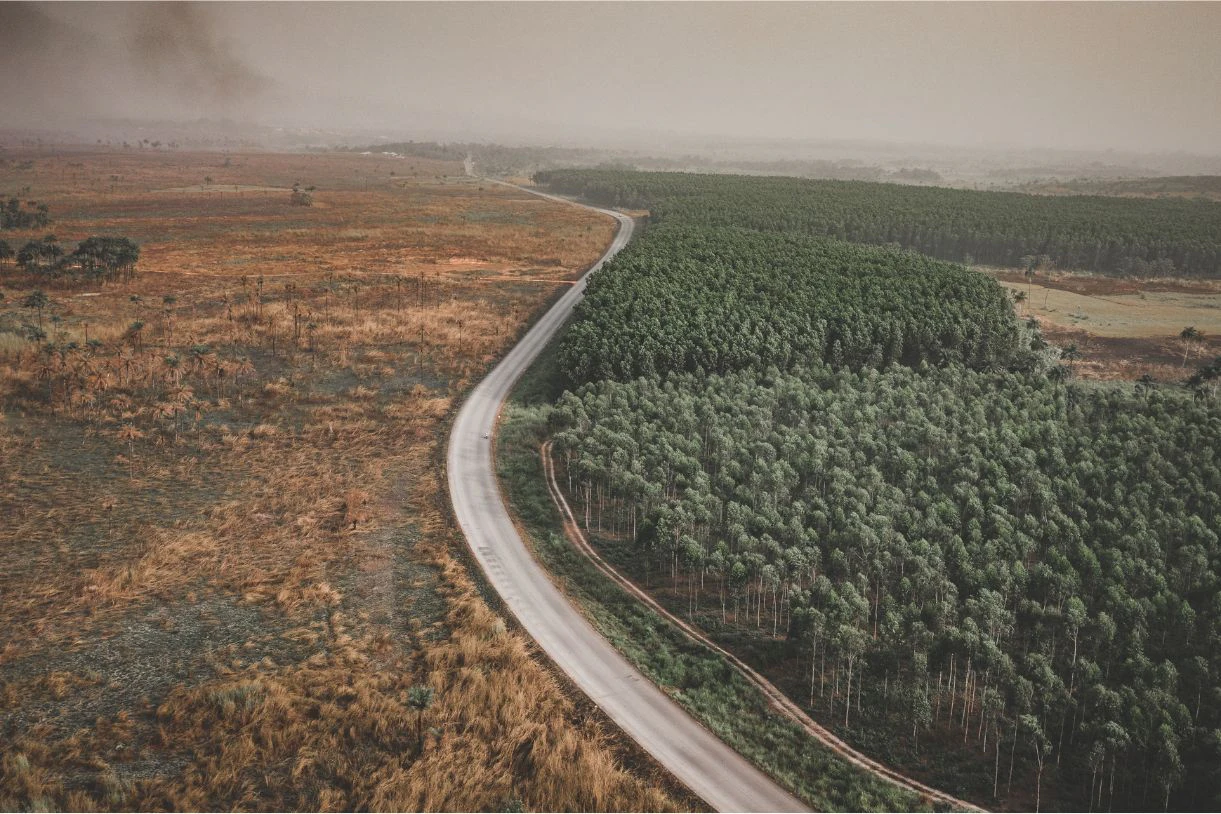
The European Union Deforestation Regulation (EUDR) is a law aimed at reducing the EU's role in global deforestation and forest degradation. It applies to companies placing specific products on the EU market or exporting them from it.
Under the amendment agreed by EU co-legislators in December 2025, the application dates were postponed:
- 30 December 2026 for large and medium-sized operators, and for micro and small operators already covered by the EU Timber Regulation
- 30 June 2027 for other micro and small operators
Covered Commodities
Seven high-risk commodities fall under the regulation:
- Cattle
- Cocoa
- Coffee
- Palm Oil
- Rubber
- Soy
- Wood
It also includes a range of derived products, such as chocolate, leather, furniture, books, and packaging materials.

What Changed in July 2026
On 13 July 2026, the European Commission adopted two measures that complete the simplification package it presented in May 2026. Together with the December 2025 legislative amendment, they give businesses, Member States, and trading partners the legal certainty needed to prepare before EUDR starts to apply at the end of 2026.
1. Delegated Act on Product Scope
The Commission updated Annex I of the EUDR, following stakeholder consultation and public feedback.
Removed from scope:
- Cattle hides, skins, and leather
- Re-treaded tyres
- Soybeans for sowing
- Articles of vulcanised rubber
- Conveyor and transmission belts
- Aircraft and motor vehicle seats
Added to scope (from 30 December 2027, to give businesses time to prepare):
- Soluble coffee
- Certain palm oil derivatives
- Frozen cattle tongues
The update changes which derived products are covered. It does not change the seven underlying commodities. The Commission also clarified that samples and products used for analysis, examination, and testing fall outside the regulation, and introduced targeted exemptions for waste, used and second-hand products, packing material, and products used to manufacture medicinal products.
The Delegated Act now goes to the European Parliament and the Council of the EU for scrutiny before entering into force.
2. Implementing Act on the Information System
The Commission adopted technical rules for the EUDR Information System, the platform operators use to submit due diligence statements. Changes include:
- Simplified declarations for micro and small primary operators
- Updated technical specifications for automated APIs
- Additional functionalities planned later in the summer
The Information System reopened at the end of June 2026 after technical updates. The Commission will keep updating documentation and run training sessions for companies starting at the end of July 2026.
3. Guidance Now Available in All EU Languages
The updated Guidance document and accompanying FAQ, previously available only in English, are now formally adopted in all EU official languages.
What this means for your compliance planning: if your due diligence mapping already accounts for cattle hides, re-treaded tyres, or vulcanised rubber articles, you can deprioritize those SKUs. If your portfolio includes soluble coffee, palm oil derivatives, or frozen cattle tongues, add them to your scope assessment now, ahead of the 30 December 2027 deadline. Either way, the core deadlines for large, medium, micro, and small operators have not moved.
Key Requirements
To comply, companies must ensure that their products are:
- Deforestation-free, based on land use after 31 December 2020
- Legally produced, according to local laws in the country of origin
- Accompanied by a Due Diligence Statement (DDS), which must include verifiable geolocation data for the plots where commodities were produced
From 30 December 2026, large and medium operators must be able to demonstrate that their relevant products meet these criteria. Micro and small operators not already covered by the EU Timber Regulation have until 30 June 2027.
Deforestation and Carbon Reduction
Deforestation is responsible for about 11% of global greenhouse gas emissions, more than the emissions of all global passenger vehicles combined. Forests are essential carbon sinks, and their destruction undermines efforts to limit global warming.
For manufacturers committed to net-zero targets or ESG reporting under frameworks like CSRD, removing deforestation from supply chains isn't optional. EUDR compliance directly supports science-based emissions reduction targets and long-term climate resilience.
Who Is Affected?
The EUDR applies to all companies, large and small, that operate in or trade with the EU and handle regulated commodities. It makes no difference whether you are:
- Sourcing raw materials for production
- Importing finished goods into the EU
- Selling within the EU, or
- Exporting out of the EU to other markets
The regulation has significant implications for manufacturing companies in sectors such as:
- Food & Beverage (e.g., chocolate, coffee, dairy, meat)
- Packaging and Paper (e.g., cartons, print products)
- Furniture and Wood Processing
- Automotive and Transport (e.g., leather or rubber components)
- Chemicals and Consumer Goods (e.g., palm oil-based ingredients in cleaning or cosmetic products)
Whether you're at the top of the supply chain or closer to the consumer, if your products contain any EUDR-listed raw materials, you're in scope. Check the updated Annex I product list directly, since the July 2026 Delegated Act removed several product categories and added others.
Key Functions Impacted
- Sustainability – accountable for environmental performance and ESG reporting
- Procurement – responsible for due diligence, supplier engagement, and risk data
- Supply Chain – tasked with traceability, logistics, and supplier relationships
- Legal & Compliance – ensuring regulatory alignment and handling enforcement risk
- Executive Leadership – owning strategy, risk, investor relations, and growth
The EUDR touches virtually every department in companies with global value chains, and is especially relevant in manufacturing industries that rely on agricultural, forest-based, or natural raw materials. Industry estimates put trillions of euros in trade across these sectors within scope.
What’s at Stake: Risks and Penalties
The EUDR is legally binding and backed by enforcement powers. Non-compliance isn't just a reputational issue; it's a direct business risk.
Fines and Financial Exposure
Companies may face fines of up to 4% of their annual EU turnover, as well as product confiscation and exclusion from the EU market. These penalties apply not only to products linked to deforestation, but also to failures in documentation, such as missing or incorrect DDS filings.
Import and Export Bans
Authorities can block shipments at the border. Even a single non-compliant farm plot can result in an entire container or batch being denied entry, a risk made real by findings that 2% of farm plots show signs of deforestation and 1% have legality issues.
Production Standstill
For manufacturers with just-in-time supply chains, blocked shipments can lead to factory downtime, missed orders, and broken SLAs. The risk is particularly high in commodity-dependent sectors like cocoa, soy, and palm oil.
Compliance Costs
The cost of compliance is manageable but not negligible. For large companies, EUDR implementation is expected to cost around 0.1% of revenue and 1.45% of operating profit. For SMEs, this rises to 0.17% of revenue. Early investment in systems and supplier collaboration reduces long-term costs and risk.
Why You Need to Act Now
1. Supply Chains Take Time to Map
Plot-level geolocation and legality verification cannot be retrofitted overnight. Supply chain mapping, particularly in tier 2 to 3 regions, requires early and sustained supplier engagement.
2. Avoid Disruption and Loss
Last-minute preparation could lead to shipment blocks, supply shortages, and customer dissatisfaction, particularly for EU-bound production runs and critical components.
3. Build Trust and Future-Proof Your Business
Demonstrating compliance early reduces risk and strengthens supplier relationships and brand equity with environmentally conscious consumers and investors.
4. The Rules Are Still Moving
The July 2026 product scope and Information System updates show the regulation is still being refined ahead of application. Companies that track these changes as they happen, rather than reacting after the fact, stay ahead of documentation requirements and avoid last-minute scope surprises.
4 important steps companies must take now
1. Conduct a Risk-Based Supply Chain Assessment
- Identify which commodities and suppliers are in scope under the current Annex I list
- Map out geographies with known deforestation or legal compliance risks
2. Engage Suppliers Proactively
- Communicate expectations clearly
- Begin collecting required documentation and geolocation data
3. Invest in Traceability Systems
- Use technology such as GIS, satellite imaging, or transactional data platforms to track commodity origins
- Integrate with procurement and ERP systems for verification at the SKU and transaction level, so scope changes like the July 2026 update can be applied without rebuilding your data model
4. Align Internally
- Create cross-functional governance involving Legal, Sustainability, Procurement, and Supply Chain
- Appoint EUDR leads to own the transition roadmap, monitor regulatory updates, and manage reporting through the EUDR Information System
EUDR: A Strategic Business Issue
The EUDR is not just a compliance problem; it is a strategic priority that intersects with revenue protection, risk management, and ESG leadership.
Revenue and Market Access
With up to 4% of EU turnover at risk and the possibility of exclusion from one of the world's largest markets, EUDR demands board-level attention.
Investor and Regulatory Expectations
Institutional investors and regulators expect companies to demonstrate climate and nature-related risk mitigation, including deforestation.
Supply Chain Resilience
Failure to adapt now could result in raw material shortages, operational standstills, and long-term competitive disadvantage.
Reputation and Leadership
EUDR compliance positions your brand as a responsible, forward-looking leader, a critical asset in stakeholder-driven markets.