From the Edges to the Center: How Should We Talk About Decarbonization?
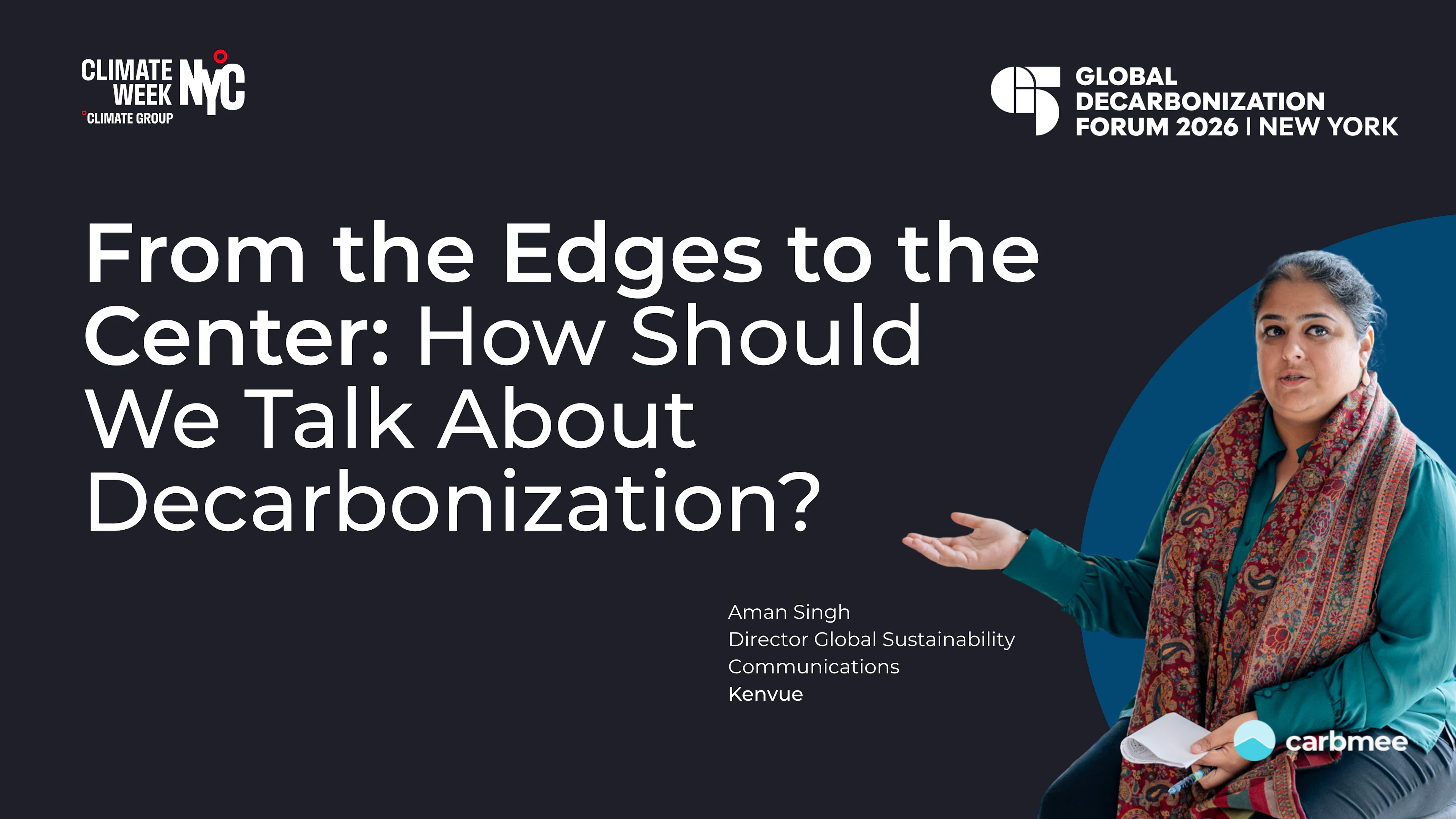
At the Global Decarbonization Forum 2026 - New York held during Climate Week NYC, Aman Singh, who leads sustainability communications at Kenvue, joined a fireside chat on the role of communication in driving sustainability forward. The conversation addressed a challenge many organizations face: data, technology and targets are essential for decarbonization, but they only create impact when people inside and outside the company understand them and act on them.

Consistency Makes the Story Credible
Like most large companies, Kenvue has commitments across healthy people, planet and products - with an emphasis on how product innovation can drive impact. According to Aman, that’s a huge opportunity across the consumer goods industry given the direct line that offers for storytelling and ultimately behavior change. She illustrated this with Listerine. The brand now uses 100% recycled plastic in its bottles across Europe, the Middle East and Africa and 50% across North America. The innovation and supply chain coordination was a major milestone for the brand - making the entire bottle recyclable, so consumers no longer need to remove the label and cap before recycling it. Removing that friction for consumers is one of the best ways that brands can help support people’s desire and expectation to be more sustainable in their routines. That’s how we can practically build more sustainable practices into everyday care, she said.
Speaking the Language of Each Function
Bringing sustainability into business decisions requires understanding what matters to different teams. Operations focuses on efficiency, cost savings and keeping production running. R&D focuses on its product pipeline and ingredients. Regulation can help bring these functions together, but it is not the only lever. In crowded markets, where newer competitors build sustainability into their products from day one, sustainability can also be a source of differentiation. Aman encourages leaders to look beyond next year's targets and consider where the business needs to be in five years.
Making Climate Relatable
Externally, companies are navigating shifting geopolitics and growing scrutiny of their sustainability claims. Aman's view is that the answer is not to communicate less, but to communicate differently. After 15+ years in sustainability communications, she believes the era of brands lecturing audiences is over. People experience heat waves, wildfires and pollution, not abstract tipping points. Companies therefore need to make climate relevant to everyday realities and offer practical guidance rather than general messages. This also means being deliberate about stakeholders. Investors, for example, expect concrete detail on how climate targets will be met vs consumers who want easy to use, effective and affordable products that can protect their skin from bad air quality for example or extended allergy seasons.
Breaking Down Silos
Asked what attendees could do differently that coming Monday morning, Aman offered practical advice. She suggested meeting three colleagues you have never met and learning what drives them, because stories often move decisions faster than data. She also recommended cross-functional teach-ins, where one team explains how it really works to another, and encouraging colleagues to attend events outside their own field. Sending non-sustainability colleagues to sustainability events, and sustainability teams to finance conferences, for example, can help each side understand how the other function makes decisions, their priorities and market drivers.
Communication as a Driver of Decarbonization
The central message of the conversation was clear: decarbonization depends not only on reliable data and ambitious targets, but on people who understand why they matter and how to act on them. Consistent progress, a shared language across functions and relatable communication all help turn sustainability commitments into action. As Aman put it, the goal is not to preach to people, but to guide them, invite them on the journey as core contributors. That’s how more sustainable routines, behaviors and actions become the default.