
Did You Know You Can Improve Sustainability Data Quality with AI in Carbmee EIS?
Sustainability data quality is quickly becoming one of the biggest barriers to credible carbon management. For many companies, the challenge is no longer a lack of ambition, but the reality of working with fragmented ERP exports, supplier spreadsheets, inconsistent emission factors, missing activity data, and manual validation steps.


From fragmented ESG inputs to trusted emissions intelligence
That matters because sustainability reporting is becoming more data-intensive and assurance-driven. PwC notes that CSRD has increased the focus on ESG data quality, with auditors expecting evidence that data validations have been conducted. At the same time, the GHG Protocol’s Scope 3 guidance highlights data quality indicators such as technological, temporal, and geographical representativeness, as well as completeness and reliability.
For procurement, sustainability, finance, and supply chain teams, this shifts the role of carbon data. It is not enough to calculate emissions once. Teams need emissions data that can be collected efficiently, checked consistently, improved over time, and trusted enough to support reporting, supplier engagement, and business decisions.
Why emissions data quality matters now
As carbon reporting moves closer to financial-grade accountability, data quality becomes a business risk. Incomplete supplier inputs, mismatched emission factors, duplicated records, and outdated assumptions can weaken reporting accuracy and make it harder to identify where reductions should happen.
The market is also moving toward more granular and comparable carbon data. WBCSD’s Partnership for Carbon Transparency, PACT, focuses on accurate and comparable product-level carbon footprints using supplier-specific primary data. This reflects a broader shift: companies need to move from estimated emissions to explainable emissions intelligence.
AI can help with that transition, especially when it is applied to the operational work that slows teams down: collecting data, matching records, validating inputs, identifying anomalies, and surfacing gaps before they appear in reports.
The AI data quality loop
Improving sustainability data quality is not a single clean-up project. It is a continuous loop that turns scattered data into reliable environmental intelligence.
Capture the source data, not just the spreadsheet
High-quality emissions reporting starts with the systems where business activity already happens. ERP, procurement, supplier, product, and transaction data hold the details needed to calculate emissions more accurately.
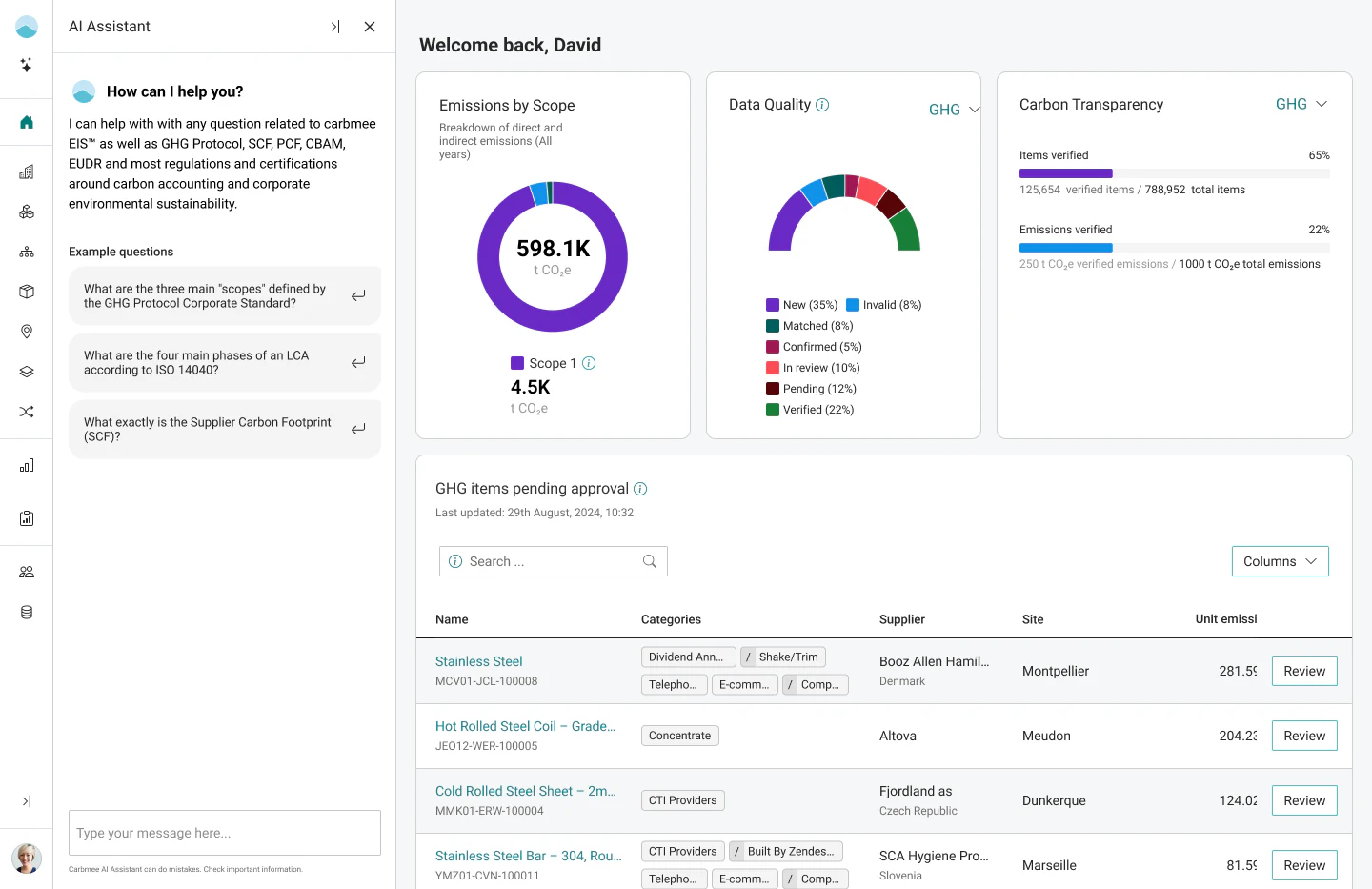
Carbmee EIS™ connects environmental data across products, sites, supply chains, and transactions, helping companies move beyond manual spreadsheet consolidation and build a more structured foundation for emissions management.
Match activity data to the right emission factors
One of the most time-consuming parts of carbon accounting is matching materials, products, suppliers, and spend lines to the correct emission factors. Poor matching can distort the footprint and reduce confidence in the results.
Carbmee uses AI-driven data matching to connect customer data with emission data from databases such as ecoinvent, helping create more granular emissions insights across large supply chain datasets. Carbmee’s generative AI approach is designed to process large volumes of data, improve matching accuracy, and support more specific emissions calculations.
Validate data before it reaches reporting
Better data quality depends on validation. Teams need to detect missing records, suspicious values, inconsistent units, duplicate entries, and supplier submissions that do not meet expected standards.
This is where AI and automation can reduce manual review effort. Carbmee’s product updates include expanded AI emitter matching, bulk validation workflows, and stronger supplier Quality Gates, helping procurement and sustainability teams improve emissions data quality before it flows into dashboards, reporting, or sourcing decisions.
Close supplier data gaps faster
Scope 3 data quality depends heavily on suppliers, but supplier data collection is often slow, inconsistent, and difficult to scale. AI-powered workflows can help teams identify which suppliers need follow-up, which data points are missing, and where primary data would improve the overall footprint most.
With Carbmee EIS™, supplier engagement becomes part of the data quality process, not a separate manual task. Teams can work toward more complete, supplier-specific data while still maintaining reporting momentum.
Turn validated data into decisions
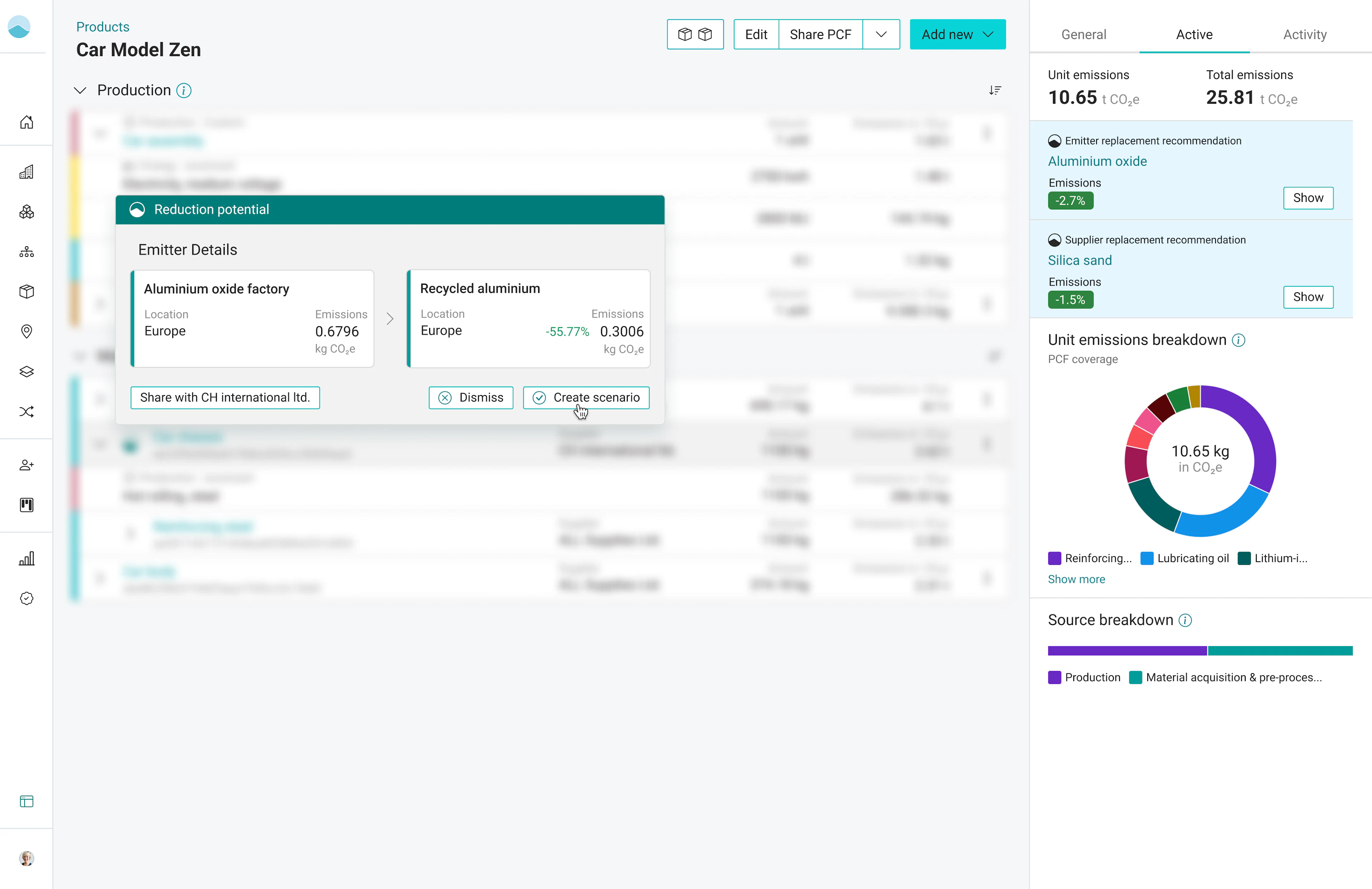
Once emissions data is structured and validated, it becomes useful beyond compliance. Procurement can compare supplier performance. Product teams can understand material-level hotspots. Sustainability teams can prioritize reduction measures. Finance teams can connect carbon performance to risk and cost exposure.
That is the real value of AI in sustainability data quality: not just faster reporting, but better decisions based on more reliable environmental intelligence.
Ready to move beyond static PCFs?
Dynamic PCFs help manufacturers turn product carbon data into a decision-making layer. Instead of calculating a footprint once and letting it age, teams can use supplier-specific data, automated updates, and product-level insights to identify hotspots, compare options, and support lower-carbon decisions.
Book a Carbmee EIS™ demo to see how dynamic Product Carbon Footprints can support procurement, sustainability, product, and commercial teams with carbon data that moves with the business.
Ravensburger: solving Scope 3 data gaps at speed
Ravensburger offers a strong example of why automation and data quality matter. The company faced the challenge of managing Scope 3 transparency across an interconnected value chain in Europe, Asia, and the Americas. Internal approaches meant searching across multiple databases and dealing with data gaps that slowed calculations.
Using Carbmee EIS™, Ravensburger achieved Scope 3 carbon transparency in 20 days, saving months of manual calculations. The platform helped identify data gaps across multiple systems, support new data requirements for future purchases, and enable more granular sustainability insights.
For companies working with complex supply chains, this is the next step in carbon management: using AI and automation to improve data quality continuously, not only at reporting deadline.
Ready to improve the quality of your sustainability data? Book a Carbmee EIS™ demo to see how AI-powered data collection, validation, and emissions intelligence can help your teams report with more confidence and act with greater precision.


